
 English
 Español
 Français
 Deutsch
 Polski
 Türkçe
 Русский
 简体中文
简体中文Control part distortion
Balanced support across thin-wall sections reduces chatter and geometry drift.
Keep complex aerospace parts stable across 5-axis setup sequences. Maintain consistent datums through finish operations while protecting thin-wall areas from distortion.
Project priorities at a glance
Control part distortion
Balanced support across thin-wall sections reduces chatter and geometry drift.
Maintain datum integrity
One solid reference plane guides roughing through final finish without re-clamping variation.
Minimize machine time
Faster setup and proving on high-mix aerospace schedules cuts cycle time and overhead.
Most aerospace teams face three interrelated risks: thin-wall deflection, re-clamp variation, and setup time on machines that cost thousands per hour.
Position clamps away from work surfaces and choose modular systems that apply load symmetrically across the part.
Reference surfaces must remain stable between tool path segments and across every repeat fixture or pallet.
Use pre-standardized locating kits and quick-change clamping to get parts running without lengthy trial cuts.
Review your part geometry, critical tolerances, and machine capabilities here. These factors drive the datum plan and fixture choice.
| Typical parts | Structural brackets, housings, frames, tooling, impellers, and other complex precision parts. |
|---|---|
| Typical risks | Re-clamp variation, collision risk, thin-wall vibration, and too much setup time on expensive machines. |
| Typical goals | Stable datums, faster proving, and better repeatability across roughing, semi-finishing, and finishing. |

Shopfloor preview
Visualize the setup on your machine, the load path through the fixture, and how parts move between stations.

Clamp position, load angle, and clear distances to all work surfaces. A solid fixture direction prevents re-clamping surprises.

Move parts from roughing to finish on the same fixture, or swap pallets without losing datum. Decide this before you build.
Start with the system that best matches your part envelope and machine type. Each builds reliable datums in different ways.

Lock a repeatable reference plane for multi-fixture, multi-pallet setups.
View product →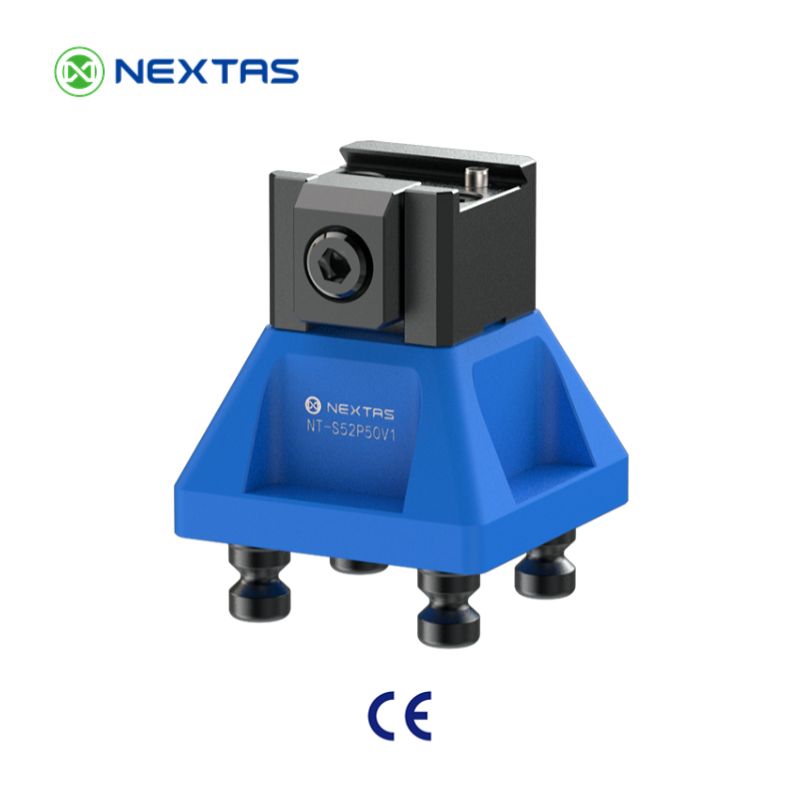
Minimize clamp footprint and maximize access for long tools and complex angles.
View product →Grip prismatic or simpler parts with balanced clamping force across both jaws.
View product →
Anchor datum chucks to your machine spindle for rotating part operations.
View product →Work through these steps for every new part family. They prevent costly fixture rework later.
Step 1
Map critical surfaces that control geometry. These become your functional datums through roughing and finish.
Step 2
Check tool access, clamp angles, and chip paths. Confirm nothing collides and nothing clogs.
Step 3
Run one part sample under real conditions. Once proven, apply the same datum logic to additional parts or pallets.
Yes. The fixture direction depends on the part family and process risk, not on one product category alone.
Repeatable datums, controlled deformation, stable tool access, and predictable loading steps usually matter most.
Yes. A good datum plan can start with one setup and later expand into standardized plates, pallets, or repeat fixtures.
Share your machine type, part geometry, and current bottleneck. We recommend a datum plan and the right workholding system to reduce setup time and risk.