
 English
 Español
 Français
 Deutsch
 Polski
 Türkçe
 Русский
 简体中文
简体中文

Enter your email address to request the brochure. Due to time zone differences, we’ll email it the next business morning (GMT+8, Beijing Time).


Rapid Prototyping Service
CNC Rapid Prototyping & Pilot Part Support
Prototype manufacturing support for precision CNC parts and production ramp-up
Nextas rapid prototyping is built for teams that need functional CNC parts quickly, but also want the project documented well enough to move into pilot runs, fixtures and repeat production without starting over.
Ideal for engineering validation, pilot-part supply and a cleaner handoff into fixtures or repeat production once the design is frozen.
Fast functional validationParts for fit, assembly and process checks before you invest in full production fixturing.
Tight-tolerance CNC supportAdvanced machining and inspection support precision prototype features, subject to geometry, material and inspection method.
Prototype-to-production bridgeThe same project can roll forward into datum selection, custom fixtures and palletized changeover once the design is frozen.
Jump in by task
Start with RFQ readiness, then move into process and quality details
Use the shortcuts below when the active question is process selection, quote preparation, or keeping prototype iterations predictable enough to move into pilot runs.
Selection focus
Decide whether the job is proof-of-concept, EVT/DVT, or pilot production so the material route, tolerance strategy, and documentation level stay aligned.
RFQ focus
Prepare CAD, quantity, critical features, finish needs, and delivery timing so quoting and manufacturability review can move faster.
Quality focus
Clarify which dimensions need inspection reports and which surfaces are cosmetic before the prototype becomes a pilot or production handoff.
Fast engineering handoff
Send prototype inputs that shorten the first review
- 3D / 2D drawings, target quantity, and preferred material.
- Critical tolerances, assembly features, and cosmetic surfaces.
- Needed reports such as CMM, material certs, or traceability.
- If the part will move into pilot runs, fixtures, or repeat production.
(5).png?updatedAt=1755182523411)
World-Class Equipment & Materials
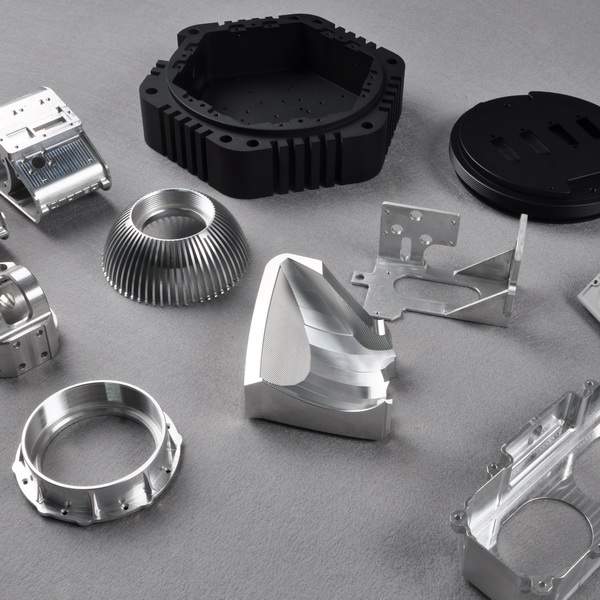
Nextas operates advanced five-axis machining centres, precision lathes, vertical mills, grinding machines and jig grinders from leading Japanese and U.S. brands. Combined with premium materials and stringent incoming inspection, our prototypes start with the best possible foundation.
Precision Machined Prototypes
Our skilled machinists leverage high-end CNC equipment to produce complex geometries with tight tolerances, including capability up to ±0.002 mm on supported features. Final results depend on geometry, material, and inspection method.


High Stability & Accuracy
Each prototype is built for stable, repeatable performance during testing. Robust constructions with multiple fastening points and reinforced sections maintain dimensional integrity during testing and integration.
Versatility & Surface Finish
Beyond machining, we offer specialised heat treatments and a wide range of surface finishes—sandblasting, anodising, black chrome plating and diamond-like carbon (DLC)—to achieve the functional and cosmetic qualities you need.
Core Advantages
- Premium Materials & Inspection: We source only high-grade materials and provide full inspection reports to guarantee traceability and reliability of every prototype.
- Tight-Tolerance Capability: Skilled machinists and 5-axis CNC equipment achieve tolerances of ±0.002 mm for the most demanding applications.
- Specialised Heat Treatment: Controlled heat treatments create high-hardness parts engineered to withstand extreme loads and wear.
- detailed Surface Finishes: Choose from sandblasting, anodising, black chrome plating or DLC to achieve your desired functional and cosmetic qualities.
- In-House Production & Cost Control: Vertically integrated facilities enable strict cost control and deliver competitively priced prototypes without compromising quality.
- Rigorous Outgoing Inspection: Every shipment is thoroughly inspected so final prototypes meet or exceed your specifications.
Capability & Specification Tables (Quick Reference)
For fast quoting and predictable results, the tables below summarize what matters most: tolerances, materials, finishes, and what to include in your RFQ.
Typical capability snapshot
| Item | Typical range / options | Notes |
|---|---|---|
| Tolerance capability | Up to ±0.002 mm on supported features | Actual outcome depends on geometry, material, and measurement method. |
| Materials | Aluminum, stainless steels, tool steels, engineering plastics, specialty alloys | Tell us the exact grade if your test requires it. |
| Processes | CNC milling/turning, 5-axis machining, precision grinding | We choose the most stable route for your critical datums. |
| Heat treatment | Available based on part requirements | Used to improve wear resistance or stability when needed. |
| Surface finishes | Anodizing, blasting, plating, DLC-style coatings (as required) | Finish selection should match function (wear/corrosion/appearance). |
| Inspection & deliverables | In-process + final checks; measurement reports on request | Share your critical dimensions and verification needs early. |
RFQ checklist (what to send)
| What to provide | Preferred format | Why it matters |
|---|---|---|
| 3D model | STEP / IGES | Faster quoting and clean toolpath planning. |
| 2D drawing | PDF (with GD&T) | Clarifies critical datums, surfaces, and tolerances. |
| Material + quantity | Text / BOM | Affects machining route, fixturing, and cost. |
| Target finish | Text / spec | Ensures the prototype matches functional/cosmetic needs. |
| Deadline & delivery address | Text | Allows realistic scheduling and shipping planning. |
| Inspection requirement | Text (e.g., CMM report) | We align measurement method and documentation. |
If you’re unsure about tolerances or finishes, send your use case (fit check / functional test / pre-production) and we’ll suggest a practical spec.
Selection • Integration • Quality Cheatsheet
A practical checklist for rapid prototyping: choose the right process/material, submit clean data, and keep results consistent across iterations.
1) Selection: pick process and scope
| If you care most about… | Start with… | Why this helps |
|---|---|---|
| Fastest lead time | Prioritize critical features only; choose common materials and standard processes. | Reduces setup steps and avoids custom tooling or special sourcing. |
| Tight tolerances on key features | Define datums and highlight critical dimensions; include a drawing with GD&T where needed. | Prevents rework and aligns inspection to what matters. |
| Surface finish / aesthetics | Specify finish targets (e.g., Ra) and post-processing options (deburr, anodize, bead-blast). | Avoids surprises and keeps fit/appearance consistent. |
| Cost control | Simplify geometry (avoid deep pockets, thin walls), use standard stock sizes, and batch similar parts. | Lowers machining time and reduces scrap risk. |
2) RFQ checklist: what to send for a fast quote
| Item | Typical choice | Practical tip |
|---|---|---|
| 3D files | STEP is preferred; IGES/Parasolid also common | Use consistent units, include assembly orientation, and name revisions clearly. |
| 2D drawing | PDF with datums, tolerances, notes | Mark ‘critical-to-function’ dimensions and acceptable alternates. |
| Material and treatments | Grade, hardness, heat-treat, surface treatment | If unsure, state the use case (strength, corrosion, temperature) and we’ll suggest options. |
| Delivery plan | Quantity, target date, prototype → pilot roadmap | Tell us if you need matched sets or incremental revisions across batches. |
3) Quality: keep iterations predictable
| Risk / failure mode | Early symptom | Prevention / quick fix |
|---|---|---|
| Revision confusion | Wrong version manufactured | Include revision in file name + drawing title block; one ZIP per revision. |
| Ambiguous tolerances | Unexpected fit issues | Add datums and explicit tolerances; note which dims are ‘reference only’. |
| Post-processing distortion | Warp or size drift after heat/finish | Plan machining allowance; specify ‘finish after heat-treat’ if required. |
| Inspection mismatch | Reports don’t cover what you need | Define acceptance criteria and requested report type (CMM, material cert, photos). |
Want a DFM review or help selecting material/process for your prototype?
Contact usWhen rapid prototyping is the right first step
Rapid prototyping works best as a bridge from first-article validation to pilot production, with enough process and inspection discipline to support the next manufacturing decision.
Choose rapid prototyping when you need
- Functional validation parts, pre-production samples or low-volume pilot pieces before hard tooling or fixture investment.
- Fast feedback on tolerance strategy, material choice, surface finish and inspection scope.
- A supplier who can comment on DFM while still shipping real parts on a short timeline.
Move earlier to production planning when
- The part family is already stable and repeatable clamping, datum transfer or changeover speed now matter more than first-sample turnaround.
- The project is moving toward dedicated fixtures, zero-point systems, pallet flow or unattended machining.
- Cycle stability, inspection repeatability and automation compatibility now affect the business case more than a faster prototype date.
Best handoff path after validation
- Freeze the key dimensions and inspection points that proved critical during the sample phase.
- Decide whether the next upgrade should be a vise, zero-point interface, compact datum pallet or a more automated loading method.
- Carry the approved CAD, tolerance notes and fixture intent directly into the next production-stage quote.
What can be included in a prototype handoff
Clear deliverables help prototype work move faster and reduce rework when the same part later needs fixtures, datum transfer or small-batch production.
Manufacturing review
Revision check, material confirmation, critical-feature review and practical DFM comments before machining starts.
Inspection package
CMM results, first-article dimensions, material certificates or traceability records can be scoped around the features that matter most.
Finish & assembly readiness
Thread quality, cosmetic surfaces, deburring, heat treatment and assembly-critical notes are easier to control when they are defined from the first batch.
Next-stage production handoff
When the design stabilizes, the approved CAD, tolerance notes and fixture intent can carry directly into pallet, datum or custom fixture planning.
Frequently Asked Questions
01 What is High Precision Rapid Prototyping Service and who is it for?
High precision rapid prototyping is the fast production of functional parts with very tight tolerances (up to ±0.002 mm on supported features). It’s used for fit checks, functional testing, and low-volume validation in aerospace, medical, automotive, and automation projects.
02 What are the key specifications of High Precision Rapid Prototyping Service?
See the specifications table above for details.
03 Which machines or use cases is High Precision Rapid Prototyping Service compatible with?
CNC milling, CNC turning, 5-axis machining, precision grinding, and other processes used for functional prototype validation.
04 How is High Precision Rapid Prototyping Service installed or mounted?
Prototypes are delivered as finished parts. If you mean fixturing during machining, we design a clamping strategy (soft jaws / custom fixtures / locating pins) based on your CAD model and critical datums.
05 Where can I get CAD files or technical documentation?
If you need STEP/IGES or 2D drawings, please Contact us.
06 What materials can you use for rapid prototyping?
We work with a wide range of premium materials, including various grades of aluminum (e.g., 6061, 7075), stainless steel (e.g., 303, 304, 316), engineering plastics (e.g., PEEK, Delrin, ABS), and specialty alloys. We can source specific materials upon request and provide full inspection reports for traceability.
07 What is the typical lead time for a prototyping project?
Lead time depends on part complexity, quantity, and material. With in-house production, many prototype projects can be delivered on a short schedule, and your quote will include a clear delivery plan.
08 How do you control tight-tolerance prototype accuracy?
We achieve this micron-level precision through a combination of factors: high-end 5-axis CNC machines (like Matsuura and Okuma), skilled machinists with years of experience, a temperature-controlled environment, and rigorous in-process and final quality inspections using CMM (Coordinate-Measuring Machine) equipment.
Resources & Downloads
Related Articles
Related Products
After prototype validation, teams usually need a more repeatable production setup. These are the more natural next-step products than general-purpose chuck pages.
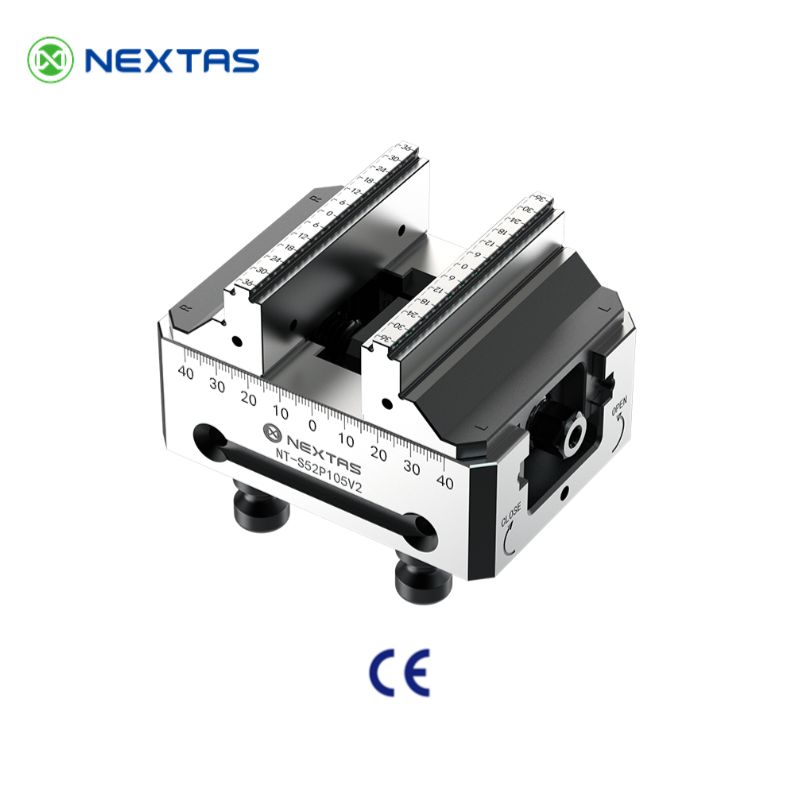
Self-Centering Vise
A practical next step when validated parts need more repeatable locating and clamping on the machine.
View Details →
Zero-Point Systems
Useful when validated parts are moving into repeat setups, palletized changeover or offline preparation.
View Details →
BDS Positioning Datum
A compact bridge from prototype fixtures into palletized or automated handling once the geometry is frozen.
View Details →