
 English
 Español
 Français
 Deutsch
 Polski
 Türkçe
 Русский
 简体中文
简体中文
Enter your email address to request the brochure. Due to time zone differences, we’ll email it the next business morning (GMT+8, Beijing Time).
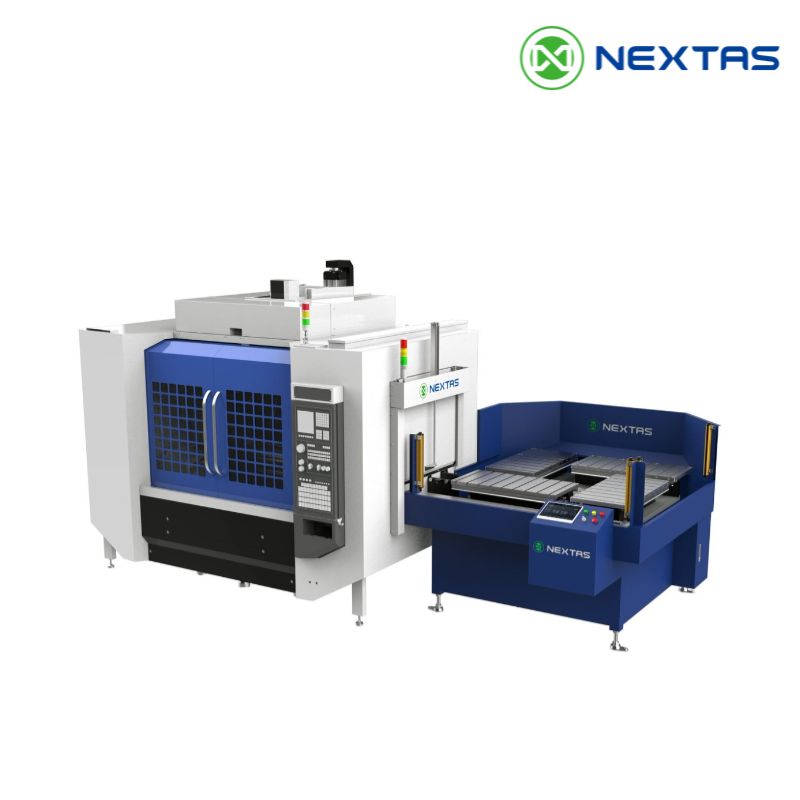
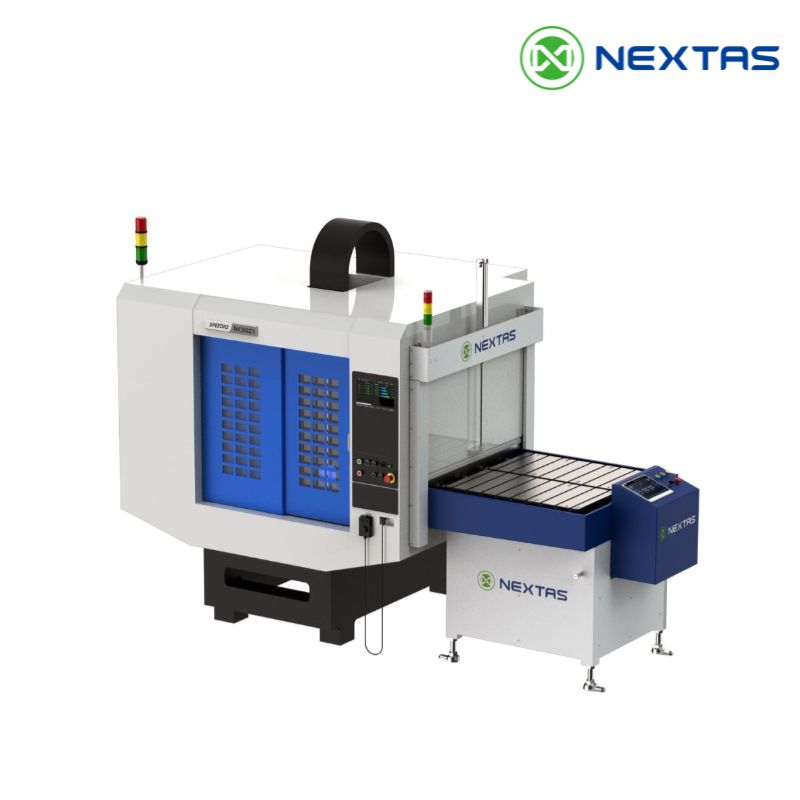
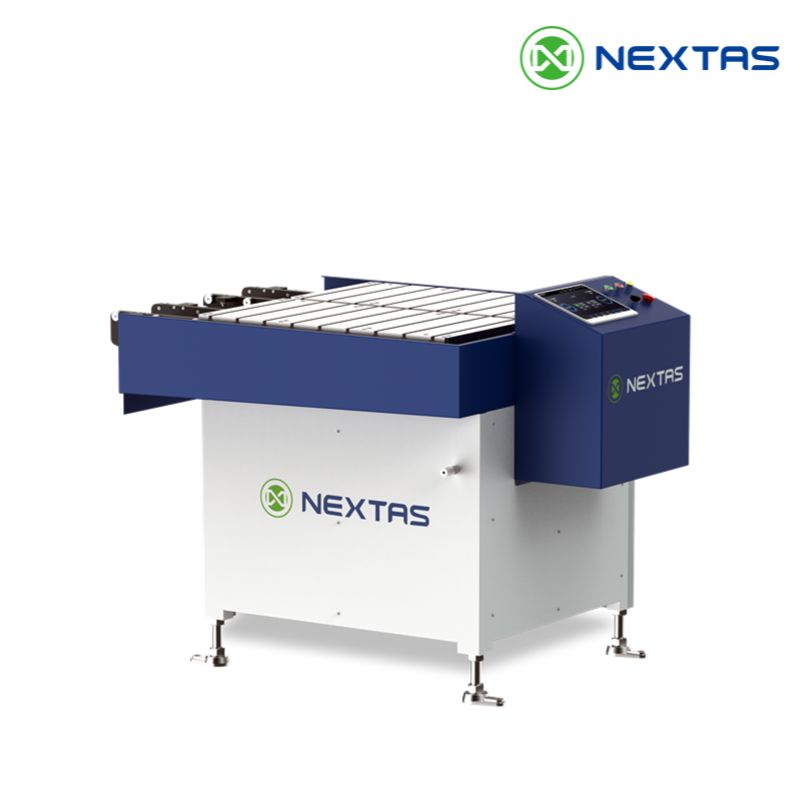
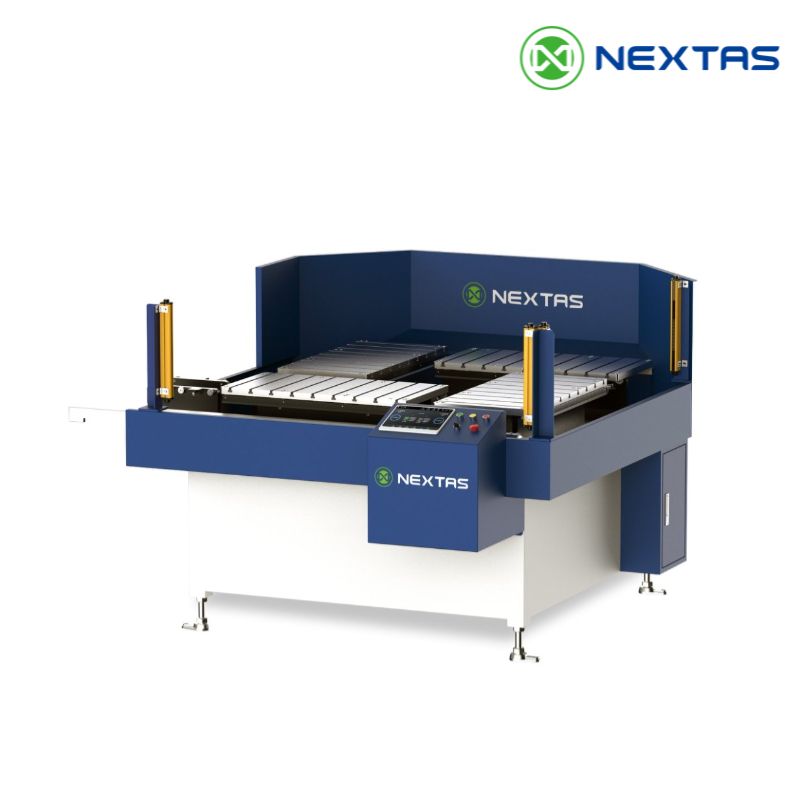
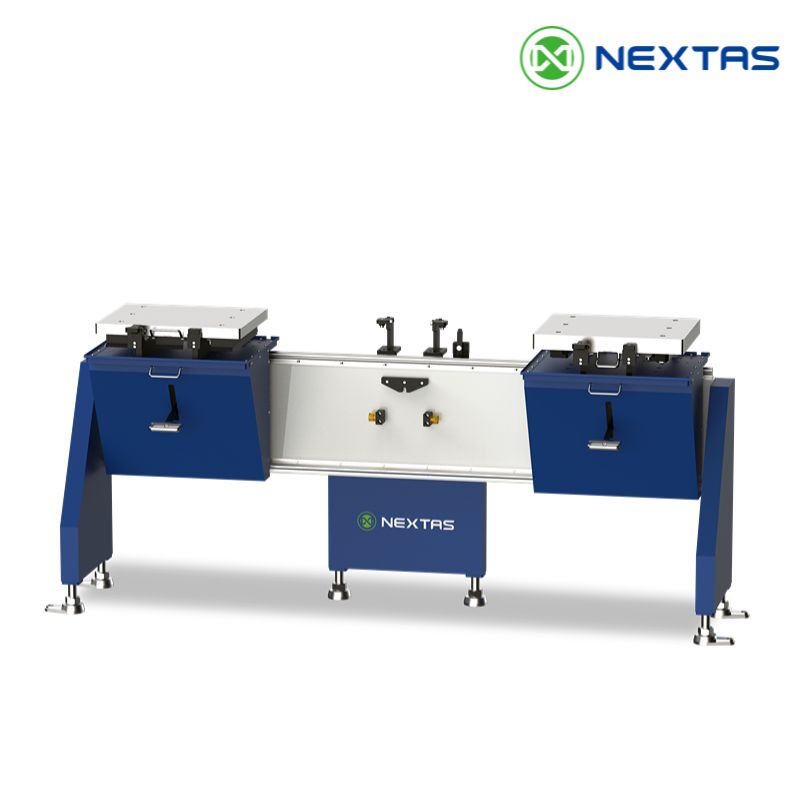
Manual & Automatic Pallet Change
CNC Pallet Changer Systems for Manual Swap or APC Automation
Manual pallet changers and APC layouts that raise spindle uptime and clean up setup flow.
This page works best when the buying question is really about setup flow. Start by deciding whether offline pallet loading is enough, or whether the project needs sensor-confirmed APC exchange, interlocks, and a stronger path toward unattended machining.
Manual + APC project paths
Offline setup or unattended flow
Zero-point / pallet-pool ready
Best fit
Choose this route when setup time is the real spindle-loss problem
Useful for shops that want pallets prepared offline, faster fixture exchange, or a practical next step toward unattended production.
Compare first
Decide manual vs APC logic before sizing the hardware
That comparison usually clarifies pallet count, sensing needs, machine interlocks, and whether a full APC layout is justified yet.
Go next
Jump to the workflow section instead of scanning the whole page
The links below are faster when the active question is evaluation, engineering integration, or resource review.
Jump in by task
Start from workflow, then move into hardware details
Use the shortcuts below if the project is currently about manual vs APC selection, machine integration constraints, or protecting uptime after installation.
Selection focus
Separate manual pallet changeover from APC logic, then size the pallet count, work envelope, and uptime target that justify the project.
Integration focus
Check machine table size, side clearance, I/O or M-code handoff, and whether zero-point, pallet pool, MES, or robot linkage is needed.
Uptime focus
Review sensor confirmation, datum cleanliness, and routine checks that keep pallet exchange stable over repeated production cycles.
Fast engineering handoff
Send the setup-flow constraints first
- Machine model, table size, and usable side clearance.
- Pallet size, workpiece weight range, and setup frequency.
- Manual swap target or unattended APC target.
- Need for zero-point, pallet pool, MES, or robot linkage.
Engineering & Integration GuideSelection Checklist & Data GuideResources & DownloadsSelection • Integration • Maintenance CheatsheetFrequently Asked Questions
CNC Pallet Changer System: higher spindle uptime, faster setup, better repeatability
A pallet changer system (manual or automatic) lets you prepare the next job outside the machine while machining continues. For job shops running high-mix, low-volume (HMLV) production, this means less waiting, fewer re-indicating steps, and a more predictable process from first piece to last piece.
Reduce setup time
Clamp a fixture on the pallet offline, then swap pallets in seconds/minutes depending on configuration—ideal for frequent changeovers.
- Quick change worktable for VMC / 3-axis milling
- Repeatable pallet references to reduce re-indicating
- Standardized fixtures and pallet plates across jobs
Improve accuracy & consistency
Using tapered datum positioning and verified clamping feedback, the pallet seats the same way every time for stable machining results.
- Micron-level repeatability (model dependent)
- Air tightness / seating detection for safer automation
- Self-cleaning air blow keeps datum surfaces clean
Enable unattended machining
Automatic pallet changing is a practical entry point for CNC automation—often simpler than adding a full robot cell.
- PLC + HMI control with standard I/O / M-code signals
- Supports pallet queue workflows and repeat setups
- Integration path to pallet pool / FMS and MES
Where pallet changer systems are commonly used
Pallet changer systems are popular in aerospace, automotive, mold & die, medical, and general precision parts machining—especially when multiple fixtures, vises, or tombstones are rotated through the same machine. They are also widely used for multi-part batching and lights-out CNC machining strategies.
Want a fast recommendation?
Send your VMC model, table size, typical part weight, and your target changeover time.
Talk to an engineerManual vs. Automatic Pallet Changer: choosing the right configuration
Both systems use repeatable pallet positioning to speed up setups. The best choice depends on your mix of parts, operator time, and how far you want to push automation.
Manual Pallet Changer System
Best for shops that want faster changeovers with minimal automation and a lower entry cost.
- Great for frequent fixture swaps on 3-axis VMCs
- Operator-controlled pallet exchange (simple workflow)
- Ideal when part volumes are moderate and staffing is stable
Automatic Pallet Changer System (APC)
Best for high throughput, HMLV production, and unattended machining where spindle uptime is the main KPI.
- Automated pallet swap cycle with interlocks & confirmation
- Supports pallet queue logic and cell-style workflows
- Integration-ready for MES/SCADA, pallet pool, or robot loading
| Selection factor | Manual | Automatic (APC) |
|---|---|---|
| Typical goal | Reduce setup time & standardize fixtures | Maximize spindle uptime & enable unattended runs |
| Changeover workflow | Operator-assisted pallet exchange | Automated cycle with sensors and interlocks |
| Best for | Job shops, prototype work, frequent part changes | Batch production, HMLV at scale, lights-out machining |
| Integration | Simple; minimal CNC signals | PLC/HMI; supports I/O, network protocols (model dependent) |
Pallet Style Options
Choose the pallet top that matches your fixture strategy—T-slot pallets for flexible clamping, magnetic pallets for fast loading of flat parts, aluminum pallets for lightweight handling, and zero-point pallets for repeatable quick change workholding. Standardizing pallet plates helps speed up CNC setups and support pallet pool workflows.

Aluminium Pallet
Material: Aluminium Alloy
Size: Adaptable to machine stroke
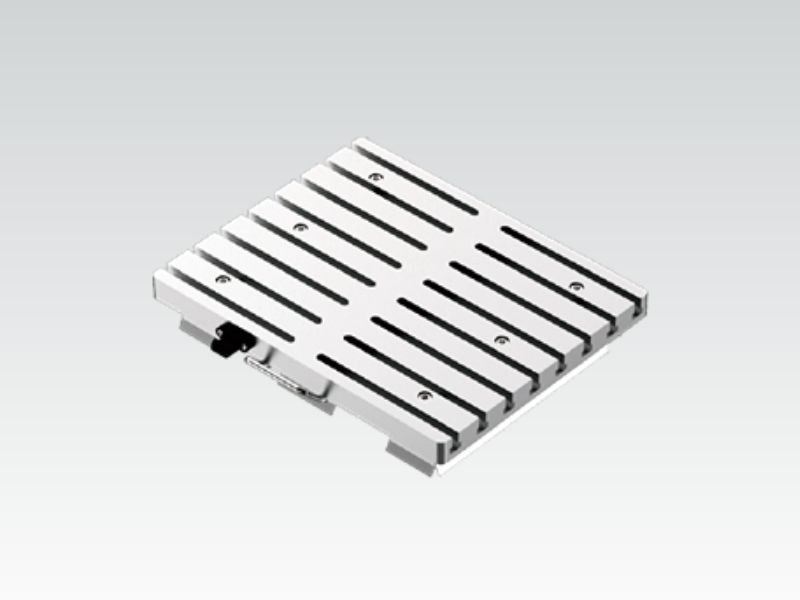
T-Slot Pallet
Material: Martensitic Stainless Steel
Size: Adaptable to machine stroke
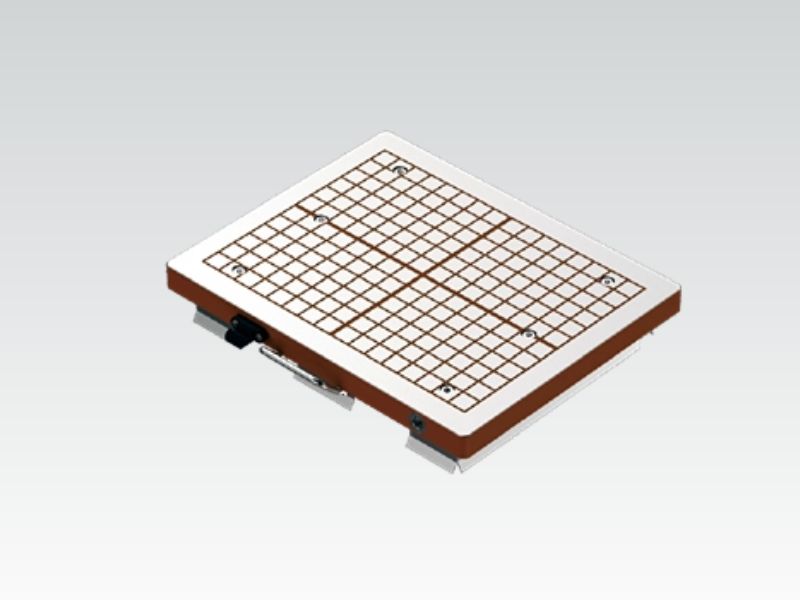
Magnetic Pallet
Material: Martensitic Stainless Steel
Size: Adaptable to machine stroke

Zero Point Pallet
With Zero Point Positioner
Material: Martensitic Stainless Steel
Product Series 2.1
Manual Pallet Changer System
The manual pallet changer is a practical way to reduce setup time on a vertical machining center (VMC). Operators can clamp a fixture pallet offline and perform a quick pallet swap, making it ideal for frequent part changes, prototypes, and short-run CNC machining.
Key Advantages
-
Stable Loading & Unloading
Flexible dual-station design supports front or side-mounted loading, enabling high-mix, low-volume production.
-
Quick Loading & Processing
Completes full layout clamping and rapid retooling in just a few seconds.
-
Efficiency & Utilization Boost
Offline loading and fast machine transfer enable unattended operation with spindle uptime gains from 30% to over 85%.
-
Safe & Labor-Saving
External clamping allows quick, effortless positioning via simple operation, reducing labor intensity.
Technical Specifications (Manual)
| Control System | Manual push control |
| Compatible Systems | Mitsubishi, FANUC, Brother, KND, etc. |
| Delivery Load | 100 Kg |
| Air-tightness Range | ± 0.01 mm |
| Max Load | 300 Kg |
| Specification | V4 Positioning Datum |
| Repeat Accuracy | < 0.005 mm |
| Clamping Force | 40,000 N |
| Max Lifting Load | 850 Kg |
Product Series 2.2
Automatic Pallet Changer System
A CNC automatic pallet changer (APC) boosts spindle uptime by automating the pallet swap cycle and confirming safe clamping before machining starts. It is well suited for HMLV production at scale, batch machining, and lights-out workflows where repeatability, safety interlocks, and controller integration matter.
Key Advantages
-
Robust External Clamping
High-strength rigid bracket structure supporting custom heavy-load configurations. Compact footprint with integrated safety protection.
-
Micron-Level Precision
Adopts zero-point positioning principles, consistently maintaining <0.005mm repeat accuracy for stable, ultra-precise clamping.
-
Broad VMC Compatibility
Compatible with multiple VMC brands. Supports front or side pallet exchange with customizable pallet sizes.
-
Smart Integrated Control
Self-developed control system supports MES/SCADA integration for unattended automated loading, management, and data visualization.
Technical Specifications (Automatic)
| Control System | Nextas |
| Compatibility | Mitsubishi, FANUC, Brother, KND, etc. |
| Communication | EtherNet/IP, ModbusTCP, Socket, PROFINET |
| System Features | Dual-station, product editing, output monitoring, capacity statistics |
| Delivery Speed | 300 mm/s |
| Movement Accuracy | 0.02 mm |
| Max Load | 2,000 Kg |
| Specification | V6 Positioning Datum |
| Repeat Accuracy | < 0.005 mm |
| Clamping Force | 60,000 N |
Engineering & Integration Guide
Planning an APC for a pallet pool, robot-tended cell, or unattended machining line? Use the guide below to size capacity, define control I/O and safety interlocks, and estimate cycle-time impact—so your pallet changer stays repeatable and integration is low-risk.
Capacity & Pallet Sizing Worksheet
Define pallet size, payload, and moment load early—especially for 5-axis fixtures—so swap accuracy and repeatability don’t drift over time.
| Parameter | What to define | Why it matters |
|---|---|---|
| Pallet size & top standard | Usable area, locating features, grid / T-slot / zero-point top | Determines fixture layout, flexibility, and changeover speed |
| Payload (kg) | Pallet + fixture + part mass (include coolant) | Affects dynamics, bearings, and safe acceleration / deceleration |
| Overturning moment | CG offset vs. locating plane (X/Y/Z) | Critical for repeatability under heavy cuts and high feeds |
| Required repeatability | Target position repeatability and re-indicating allowance | Sets locating strategy and verification method |
| Coolant & chips | Flood / through-spindle, chip type, chip evacuation path | Impacts sealing, sensors, and long-run reliability |
| Automation scenario | Robot, pallet pool, FMS, lights-out batch size | Defines cycle strategy and confirmation requirements |
Controller I/O & Safety Interlocks
A clean handshake (M-codes, I/O, and confirmations) prevents mis-loads and supports unattended pallet swaps.
| Signal / check | Typical implementation | Notes |
|---|---|---|
| Pallet present | Inductive / RFID / mechanical key | Use dual confirmation if running lights-out |
| Clamp OK | Pressure switch + position sensor | Avoid relying on pressure only for safety-critical clamps |
| Unclamp OK | Position sensor | Needed before axis motion / magazine movement |
| Door / guard interlock | Safety relay / PLC | Target appropriate safety level (e.g., PLd/SIL2) |
| Hydraulic / pneumatic pressure OK | Redundant pressure switches | Log pressure trends to predict leaks |
| Robot / magazine ready | Discrete I/O + timeout logic | Define safe states for recovery after E-stop |
Cycle-Time & ROI Quick Model
Estimate spindle uptime gain with a simple before/after model. This helps justify an APC versus manual pallet swapping.
| Input | How to use it | Example outcome |
|---|---|---|
| Current setup time per job | Measure indicating + clamping + probing | Baseline for payback |
| Pallet swap time | APC swap + confirmation sequence | Often minutes → seconds |
| Batch size / mix | High-mix jobs benefit most | More jobs/day with same labor |
| Spindle utilization (%) | Track cutting vs. idle | Target higher OEE with palletized flow |
| Labor rate & shifts | Include overtime / night shift premium | Quantifies saved labor and added output |
| Scrap / rework risk | Track mis-clamp or mis-load events | Interlocks + repeatability reduce costly errors |
Preventive Maintenance Plan
A simple maintenance routine keeps repeatability stable for long-run production (pallet pool / unattended machining).
| Interval | What to check | Why |
|---|---|---|
| Daily | Clean locating surfaces; check chips around reference faces | Chips are the #1 repeatability killer |
| Weekly | Inspect sensors and cables; verify clamp/unclamp confirmation | Prevents false positives and downtime |
| Monthly | Check pressure stability; inspect seals; test interlock chain | Catches leaks and drifting switches early |
| Quarterly | Verify repeatability with a gauge pallet / probe routine | Creates a measurable baseline for QA |
| Annually | Full inspection: bearings, manifolds, wear surfaces | Extends lifecycle and reduces surprise failures |
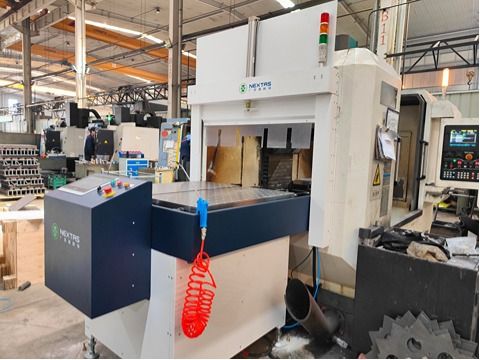
Real-World Applications
From multi-fixture job shops to automated production cells, pallet changer systems help keep the machine cutting. Common applications include milling families of parts on dedicated fixture pallets, running multiple SKUs overnight, and standardizing setups across machines with repeatable pallet references.


Selection Checklist & Data Guide
Use this checklist to define your CNC pallet changer requirements: pallet size, payload, repeatability targets, controller signals, and safety interlocks. It helps speed up quoting and reduces integration risk.
Key specifications
| System type | Manual / automatic pallet changer (model dependent) |
|---|---|
| Pallet options | Aluminum, T-slot, magnetic, and zero-point pallet styles |
| Automation fit | Designed for pallet pool / robot / unattended workflows |
| Repeat setup | Repeatable pallet location to reduce re-indicating |
| Interface | Customizable for machine table sizes and patterns |
| Safety | Interlocks and confirmation strategy (system dependent) |
Tip: share your part material, machine model, and target takt time. We’ll propose the right configuration and measurable targets.
Compatibility & standards
- Integrates with zero-point systems for repeatable pallet location across machines.
- Supports multiple pallet top standards to match your fixture strategy.
- Suitable for high-mix production requiring frequent pallet swaps.
Measured outcomes (before → after)
- Changeover time reduction: faster job switching and higher spindle uptime.
- Standardization: consistent pallet references reduce setup variation.
- Unattended operation: fewer manual interventions in production schedules.
Workholding configuration
- Pallet spec: size, top interface, and load requirement.
- Machine integration: mounting pattern, guarding, and clearance planning.
- Workflow: pallet queue, identification, and safe clamp/unclamp sequencing.
Evidence & proof
- Cell layout drawing showing pallet flow and safety zones.
- Demo video of pallet swap cycle and reference verification.
- Repeat location test results after multiple pallet changes (sample).
Delivery & support
- System integration review: machine model and layout needed for confirmation.
- Installation/commissioning checklist and operator training notes.
- Service plan: recommended spares and maintenance guidance.
Selection • Integration • Maintenance Cheatsheet
A compact, shop-floor reference to help you choose the right configuration, integrate cleanly with your machine/automation, and keep repeatability stable in daily production.
1) Selection: pick the right configuration
| If you care most about… | Start with… | Why this helps |
|---|---|---|
| Fast changeovers / high-mix jobs | Standardize one interface (zero-point / ITS / 3R) across machines + build fixture plates/pallets. | Enables offline setup and swaps in seconds with minimal re-indicating. |
| 5-axis access and tool clearance | Choose low-profile components and plan clearance early (stack height, clamp body, wrench access). | Avoids collisions and preserves reach for deep features. |
| Lights-out / robot-tended machining | Add confirmations (clamp-OK / part-present), chip protection, and a recovery sequence. | Reduces mis-load risk and improves automation reliability. |
| Heavy roughing / high cutting forces | Increase support points and rigidity (more clamping stations, stiffer base, shorter stack-up). | Minimizes deflection and protects surface finish. |
2) Integration: what to prepare before install
| Item | Typical choice | Practical tip |
|---|---|---|
| Mounting and datums | Bolt pattern + dowel pins / keyways / reference edge | Define a master datum and keep a gauge pallet/part for quick verification. |
| Utilities | Clean, dry air with FRL; stable pressure; (hydraulic/electrical if used) | Drain FRL regularly and avoid long, restrictive hoses that slow actuation. |
| Control handshake | M-codes/PLC I/O: clamp, unclamp, clamp-OK, fault | Use timeouts + safe states; log signals to diagnose intermittent downtime. |
| Process validation | Probe macro / indicator check / first-article routine | Baseline repeatability after installation, then compare weekly. |
3) Maintenance: keep repeatability stable
| Risk / wear point | Early symptom | Prevention / quick fix |
|---|---|---|
| Chips on locating surfaces | Parts shift, repeatability drifts | Air-blow + wipe seating faces; add chip covers/air blast if needed. |
| Seals/wipers and sliding surfaces | Slow actuation, leaks, inconsistent clamp | Inspect on schedule; keep coolant/abrasives out; replace wear items proactively. |
| Loose fasteners / damaged contact faces | Unexpected misalignment, vibration marks | Torque-check; use dowels; stone minor nicks (don’t ‘machine’ the datum). |
| Contaminated air/oil | Sticky motion, alarms in automation | Improve filtration, dry air, drain bowls; keep a simple spare-kit. |
Need CAD/STEP, a mounting pattern, or a recommended setup for your part?
Contact usFrequently Asked Questions
01 What is an Automatic Pallet Changer (APC) and who is it for?
An Automatic Pallet Changer (APC) is a system that automates the exchange of pallets (which hold workpieces) in and out of a CNC machine. It's designed for manufacturers who want to keep the spindle running while setup happens off-machine, enabling unattended production and eliminating time lost to manual pallet exchanges.
02 What are the key specifications of the Nextas APC?
Key specifications include a standard pallet size of 500mm x 500mm (with custom sizes available), a maximum payload of 300 kg per pallet, and a fast pallet change time of approximately 30 seconds. It is controlled by an integrated PLC with an HMI panel.
03 Which CNC machine controllers is the APC compatible with?
Our APC system is designed for broad compatibility and can be integrated with most major CNC controllers, including Fanuc, Siemens, Mitsubishi, Heidenhain, and others via standard M-code signals or robotic interfaces.
04 What safety features are included in the APC system?
Safety is paramount. Our APC systems are equipped with safety fencing (light curtains or physical barriers) to protect operators, as well as integrated sensors to confirm pallet seating, clamping status, and door positions before initiating a change cycle.
05 How does the APC handle high-mix, low-volume (HMLV) production?
The APC is ideal for HMLV. While the machine is working on one job (Part A), an operator can be safely setting up a completely different job (Part B) on the external loading station. This 'setup-while-running' capability eliminates setup downtime, making it highly efficient to switch between different parts without stopping the spindle.
06 What is the installation and integration process like?
Our technical team works with you to ensure a smooth integration. This involves a site assessment, mechanical interfacing with your VMC, and electrical integration with your CNC controller. We provide full training for your operators and maintenance staff.
07 What is the typical Return on Investment (ROI) for an APC?
While ROI varies, many customers see a payback period of less than 12-18 months. By drastically increasing spindle uptime (often from 30% to over 85%) and enabling unattended operation, the APC allows you to produce more parts per day with the same machine and staff, leading to a rapid return on investment.
08 Where can I get CAD files or technical documentation?
If you need STEP/IGES files for your machine layout or 2D drawings for technical reference, please Contact us and our engineering team will provide the necessary documentation.
09 Can the automatic pallet changer integrate with a pallet pool or robot loading?
Yes. Many customers start with an APC and later expand to a pallet pool, FMS, or robot-assisted loading. Integration is typically done through standard CNC I/O, M-code handshakes, and safety interlocks, and can also be extended to MES/SCADA depending on the controller and system design.
10 What repeatability can I expect, and how is it verified?
Repeatability depends on the model, pallet interface, and maintenance. Our pallet changer systems use tapered datum positioning and clamping confirmation to support high repeat positioning accuracy. If you need proof for a specific tolerance, ask us for sample measurement data and verification methods (e.g., repeat location checks after multiple pallet swaps).
11 What maintenance is needed to keep the pallet changer accurate and reliable?
Keep datum surfaces clean (chips and coolant residue are the biggest enemies of repeatability), follow the recommended air supply quality, and periodically inspect clamps, sensors, and pneumatic lines. For lights-out CNC machining, we recommend a simple preventive checklist and critical spares plan to minimize downtime.
Related Products

Zero-Point Clamping System
Achieve setup times in seconds with maximum repeatability. The core of flexible manufacturing.
View Details →
Self-Centering Vise
Ideal for 5-axis machining and automated applications, ensuring the workpiece is always perfectly centered.
View Details →
R-Series Chuck
Robust and versatile pneumatic chuck for heavy-duty applications and automated environments.
View Details →