
 English
 Español
 Français
 Deutsch
 Polski
 Türkçe
 Русский
 简体中文
简体中文Enter your email address to request the brochure. Due to time zone differences, we’ll email it the next business morning (GMT+8, Beijing Time).


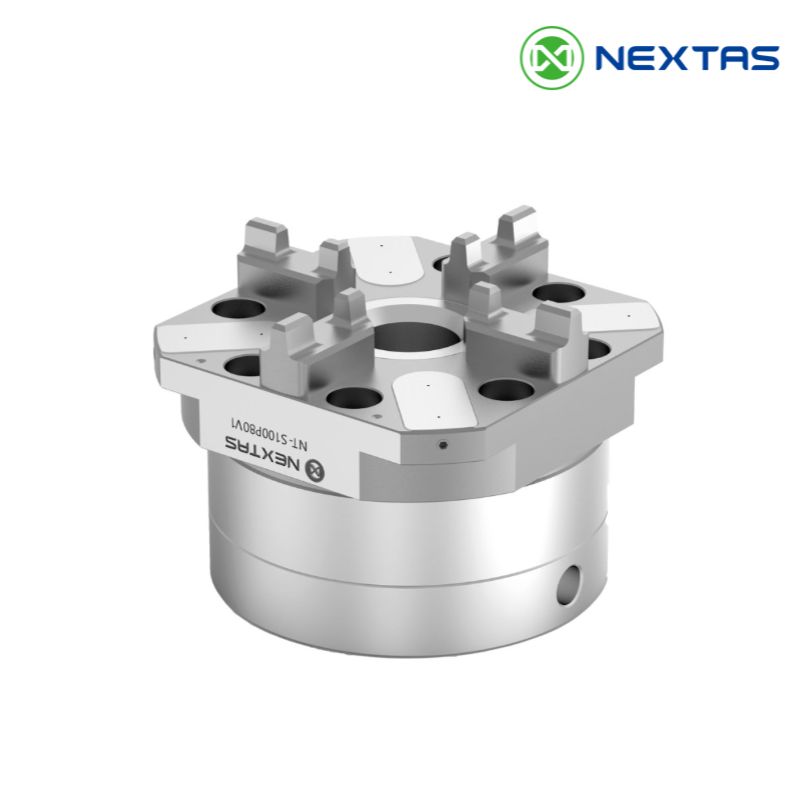


EDM / WEDM Datum Transfer
E-Series EDM Automation Chuck for EDM, WEDM & Inspection Transfer
ITS-style datum chuck platform for EDM, WEDM, grinding, CMM and electrode preparation workflows.
Use the E-Series when the real need is one repeatable reference that follows electrodes or precision parts across EDM-related stations. Instead of reading the page as one long list of Model 100 variants, start by locking the holder standard, transfer chain, and air-routing limits that decide which chuck style fits.
ITS-style holder workflow
EDM, WEDM, grinding & CMM
< 0.003 mm repeatability
Best fit
Choose this route when one datum reference must follow the EDM chain
Best for electrode and precision-part workflows that need repeatable transfer between EDM, WEDM, grinding, presetting, and inspection.
Compare first
Check holder standard, chuck orientation, and air access
That usually decides whether a standard pneumatic, side-vertical, or right-angle layout is the cleanest fit before model-by-model comparison.
Go next
Jump straight to the decision section you need
Use the shortcuts below when the real bottleneck is selection, integration, or maintenance planning.
Jump in by task
Use the page around the workflow question first
Start with the section that matches the project stage: selecting the chuck family, checking EDM-side integration, or setting daily maintenance around unattended transfer.
Selection focus
Match chuck style to holder standard, electrode size, and whether the workflow is operator-assisted or moving toward unattended EDM transfer.
Integration focus
Check hose routing, enclosure clearance, holder compatibility, and whether the reference must stay consistent across grinding, CMM, and EDM stations.
Maintenance focus
Review cleaning air, seating checks, and routine inspection that protect repeatability during long EDM cycles and repeated holder changes.
Fast engineering handoff
Send the EDM chain first
- EDM, WEDM, grinding, CMM, or mixed-station transfer path.
- Holder or pallet standard and any ITS-style compatibility target.
- Electrode or workpiece size plus enclosure / hose clearance limits.
- Manual transfer goal or unattended EDM automation target.
Quick fit guideProduct DetailsPneumatics, Setup & Maintenance for Unattended EDMReal-World Case StudiesSelection • Integration • Maintenance CheatsheetFrequently Asked QuestionsResources & Downloads
Product Details
The Nextas E-Series Chuck operates as a datum-transfer platform for high-precision clamping and repeatable referencing. Pneumatic release opens the clamping mechanism so the holder or pallet can be loaded, while the mechanical self-locking structure secures the interface once air is removed. In practice, this supports repeatable Z-datum transfer, faster job changeovers, and more predictable automation across EDM and related processes.
Built for Durability and Automation
Catalog-listed E-Series variants use hardened stainless-steel bodies, self-cleaning datum surfaces, positioning airtightness testing, and inner-hole cleaning functions. Depending on the configuration, you can choose standard horizontal, right-angle, side-vertical, or EDM-focused layouts to match machine access, indexing needs, and automation flow.
Technical Specifications
Catalog-aligned overview for the currently listed E-Series Model 100 variants.
| Parameter | Catalog-listed variants |
|---|---|
| Model family | NT-S100P100V1 / NT-S100P100V2 / NT-S100P100V3 / NT-S100P80V1 |
| Positioning concept | Mechanical self-locking datum chuck with pneumatic release |
| Repeat positioning accuracy | <0.003 mm |
| Clamping force | >6,000 N (NT-S100P100V1 / V2 / V3), 4,000 N (NT-S100P80V1) |
| Clamping load | 15 kg listed for NT-S100P80V1 |
| Operating pressure | 0.5–0.8 MPa |
| Adaptive spigot no. | NT-S200P55V2 |
| Material | Hardened stainless steel |
| Weight range | 2.0 kg / 5.3 kg / 7.1 kg / 17.7 kg depending on variant |
| Model | Configuration | Repeatability | Clamping | Pressure | Weight |
|---|---|---|---|---|---|
| NT-S100P100V1 | Model 100 Pneumatic Chuck | <0.003 mm | >6,000 N | 0.5–0.8 MPa | 5.3 kg |
| NT-S100P100V2 | Model 100 Side Vertical Pneumatic Chuck | <0.003 mm | >6,000 N | 0.5–0.8 MPa | 7.1 kg |
| NT-S100P100V3 | Model 100 Right Angle Pneumatic Chuck | <0.003 mm | >6,000 N | 0.5–0.8 MPa | 17.7 kg |
| NT-S100P80V1 | EDM Pneumatic Chuck | <0.003 mm | 4,000 N / 15 kg load | 0.5–0.8 MPa | 2.0 kg |
Model 100 variant matrix
Accessory plates, spigots & holder-side hardware
The E-Series page should not stop at the chuck body. The catalogue also shows the positioning plates and clamping spigot that complete the EDM holder-side interface.
| Accessory | Model | Configuration / detail | Material | Weight |
|---|---|---|---|---|
| Powerful positioning plate | NT-S100P90V1 | Each positioning plate contains 8 × M8 supporting feet. | Hardened stainless steel | 0.15 kg |
| Powerful positioning plate | NT-S100P90V2 | 4 × M8 support feet + 4 × M5 screws. | Hardened stainless steel | 0.11 kg |
| 50 positioning plate | NT-S100P50V1 | Each positioning plate contains 4 × M8 support feet. | Hardened stainless steel | 0.03 kg |
| Matching clamping spigot | NT-S200P55V2 | Standard holder-side interface used with the Model 100 chuck family. | Hardened stainless steel | 0.08 kg |
Why this matters: buyers often compare only chuck-body repeatability, but unattended EDM performance also depends on the holder-side plate, spigot fit, and whether the bench, CMM, and machine all share the same reference logic.
System Selection & ITS-Style Integration Guide
If you are standardizing an EDM electrode workflow or palletized automation cell, treat the E-Series as a datum platform rather than a generic chuck. Select the variant by machine access, indexing direction, holder style, and required load—then confirm the holder/spigot combination before standardizing across machines.
Pick the right holder strategy
- Designed for ITS 50 / ER-036345-style holders and pallets; confirm fit-up details before standardizing.
- Ideal for sinker EDM electrodes, wire-EDM pallet pools, grinding, and CMM inspection where Z repeatability matters.
- Standardize pull-studs and a master holder to reduce height variation across machines.
Design for unattended automation
- Air release + spring clamp means the chuck stays locked if air pressure drops (failsafe clamping).
- Add clamp confirmation (sensor or pressure interlock) so robots only move when fully clamped.
- Use the integrated air-blast port to clear dielectric/coolant film and chips before every clamp.
Workflow-based configuration quick guide
| Workflow / process | Recommended holder & accessories | Why it works | Notes |
|---|---|---|---|
| Sinker EDM electrode machining | ITS electrode holder + master holder for verification | Fast swaps with consistent Z; reduces re-touch-off | Run an air-blast purge before clamping in heavy graphite sludge |
| Wire EDM pallet pool | ITS pallet / work carrier + clamp confirmation | Stable reference for unattended pallet changes | Use a simple OK/NG signal to the robot/APC |
| Grinding / jig grinding | Short, rigid holder + clean reference routine | Minimizes stack-up error and vibration sensitivity | Prioritize clean, dry air and frequent face wipe |
| High-speed milling of electrodes | Balanced holder + protective air blast | Helps maintain repeatability under frequent changes | Consider guarding against coolant mist ingress |
| CMM / inspection stations | Master holder + fixed datum workflow | Quick cross-machine verification of Z datum | Document the master holder ID in your quality plan |
Automation ports, signals & best practices
| Automation element | Typical connection | Purpose | Best practice |
|---|---|---|---|
| Air release | 6 ± 1 bar clean/dry air | Opens the clamp for loading/unloading | Keep hoses short; use a 5 µm filter (or better) |
| Air-blast cleaning | Timed air pulse (valve / PLC) | Clears chips and dielectric/coolant film on the interface | Pulse before every clamp to protect repeatability |
| Clamp confirmation | Pressure switch or proximity sensor | Prevents robot motion until fully clamped | Use a dual-check (pressure + sensor) for 24/7 cells |
| Presence / seating check | Machine input (I/O) / interlock | Detects missing holder or incomplete seating | Stop the cycle if seating is not confirmed |
| Maintenance counter | PLC counter / MES | Service planning for seals/springs | Trigger inspection by cycles (not only calendar time) |
Long-tail keywords: E-Series datum chuck for EDM electrodes, ITS 50 style pneumatic datum chuck, sub-0.003 mm repeat positioning chuck, hardened stainless EDM chuck, side-vertical EDM chuck, right-angle pneumatic chuck, automated pallet datum chuck.
Application Cases
EDM (Electrical Discharge Machining)
The corrosion-resistant construction and high precision make it the industry standard for holding electrodes and workpieces in die-sinking and wire-cut EDM machines.
High-Speed Milling
Provides a rigid, stable base for high-speed milling operations. Workpieces can be pre-set offline on pallets and quickly loaded into the machine, maximizing spindle uptime.
Grinding & Jig Grinding
The solid repeatability is critical for precision grinding operations, ensuring ultimate accuracy for tight tolerances and fine surface finishes.
Tool & Mold Making
The ability to move a workpiece between different technologies on the same holder cuts lead times significantly and improving accuracy.
Pneumatics, Setup & Maintenance for Unattended EDM
Repeatability in automation is a system outcome: clean air, clean datum faces, and a stable referencing routine. Use the checklist below to keep sub-0.003 mm performance predictable over thousands of cycles.
Recommended air supply
- 6 ± 1 bar clean, dry compressed air.
- Add a 5 μm filter (or better) and drain/air dryer to prevent sticky sludge in valves and seals.
- Use short air lines and quick couplers to reduce cycle time and pressure drop.
Setup & verification
- Bolt to a flat, stress-free adapter plate; verify flatness before final torque.
- Run 20–50 clamp/unclamp cycles, then re-check Z reference to confirm stability.
- Document a master gauge/holder so every machine can verify the same datum quickly.
Maintenance & reliability
- Wipe reference surfaces daily in EDM (dielectric + graphite dust can drift Z).
- Use the built-in air blast before every clamp to clear chips/fluid from tapers and receivers.
- Inspect seals/springs at planned intervals and keep a spare seal kit for 24/7 cells.
Tip for robot cells: add clamp confirmation + air-pressure monitoring to your PLC interlock so the robot only departs when the chuck is fully locked.
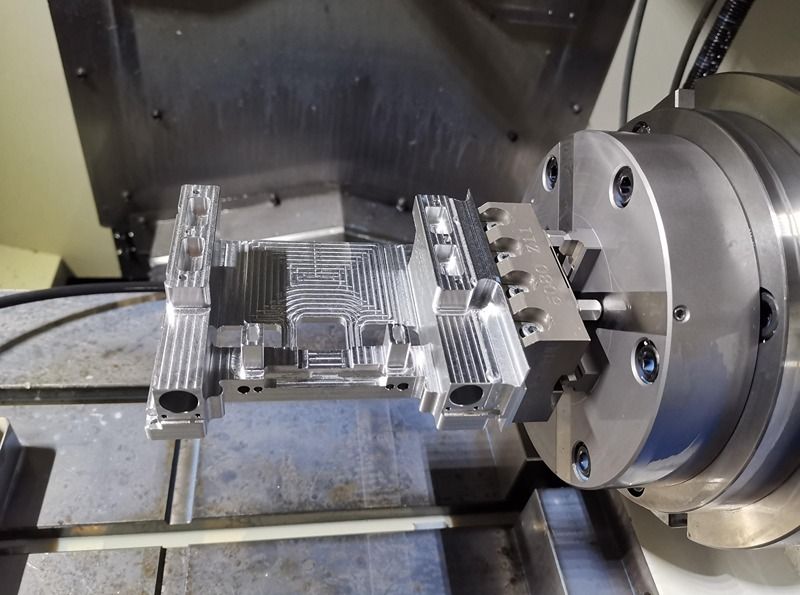
Real-World Case Studies


Selection • Integration • Maintenance Cheatsheet
A compact, shop-floor reference to help you choose the right configuration, integrate cleanly with your machine/automation, and keep repeatability stable in daily production.
1) Selection: pick the right configuration
| If you care most about… | Start with… | Why this helps |
|---|---|---|
| Fast changeovers / high-mix jobs | Standardize one interface (zero-point / ITS / 3R) across machines + build fixture plates/pallets. | Enables offline setup and swaps in seconds with minimal re-indicating. |
| 5-axis access and tool clearance | Choose low-profile components and plan clearance early (stack height, clamp body, wrench access). | Avoids collisions and preserves reach for deep features. |
| Lights-out / robot-tended machining | Add confirmations (clamp-OK / part-present), chip protection, and a recovery sequence. | Reduces mis-load risk and improves automation reliability. |
| Heavy roughing / high cutting forces | Increase support points and rigidity (more clamping stations, stiffer base, shorter stack-up). | Minimizes deflection and protects surface finish. |
2) Integration: what to prepare before install
| Item | Typical choice | Practical tip |
|---|---|---|
| Mounting and datums | Bolt pattern + dowel pins / keyways / reference edge | Define a master datum and keep a gauge pallet/part for quick verification. |
| Utilities | Clean, dry air with FRL; stable pressure; (hydraulic/electrical if used) | Drain FRL regularly and avoid long, restrictive hoses that slow actuation. |
| Control handshake | M-codes/PLC I/O: clamp, unclamp, clamp-OK, fault | Use timeouts + safe states; log signals to diagnose intermittent downtime. |
| Process validation | Probe macro / indicator check / first-article routine | Baseline repeatability after installation, then compare weekly. |
3) Maintenance: keep repeatability stable
| Risk / wear point | Early symptom | Prevention / quick fix |
|---|---|---|
| Chips on locating surfaces | Parts shift, repeatability drifts | Air-blow + wipe seating faces; add chip covers/air blast if needed. |
| Seals/wipers and sliding surfaces | Slow actuation, leaks, inconsistent clamp | Inspect on schedule; keep coolant/abrasives out; replace wear items proactively. |
| Loose fasteners / damaged contact faces | Unexpected misalignment, vibration marks | Torque-check; use dowels; stone minor nicks (don’t ‘machine’ the datum). |
| Contaminated air/oil | Sticky motion, alarms in automation | Improve filtration, dry air, drain bowls; keep a simple spare-kit. |
Need CAD/STEP, a mounting pattern, or a recommended setup for your part?
Contact usValidation Checklist & Commissioning Plan
Use this purchase/FAT/SAT checklist to confirm repeatability, clamping reliability and interface cleanliness for unattended EDM automation.
Incoming inspection & acceptance criteria
| Item | How to verify | Typical target |
|---|---|---|
| Repeatability at Z datum | CMM or dial indicator with a master holder; cycle clamp/unclamp 20–50 times | <0.003 mm on the same reference |
| Clamp force & failsafe behavior | Confirm spring clamp holds with air removed; verify no unintended release | Remains locked without air; stable holding during power/air events |
| Interface seating cleanliness | Visual + wipe test; run air-blast and inspect contact face | No trapped chips/film; consistent seating marks |
| Pneumatic response time | Measure unclamp/clamp time at 6 ± 1 bar | Stable timing; no lag from pressure drop/leaks |
| Leak & seal health | Soapy-water leak check; monitor pressure decay | No visible leaks; low decay over hold period |
| ITS compatibility | Test with your standard ITS holders/pallets and pull-studs | Smooth load/unload; no rocking; consistent Z |
| Documentation | Request verification report + maintenance notes | Traceable QC records for your quality system |
Troubleshooting quick table
| Symptom | Likely cause | Fix |
|---|---|---|
| Z shifts after several cycles | Dirty contact faces or inconsistent air-blast timing | Add purge before clamp; wipe faces; standardize cleaning interval |
| Holder won’t seat fully | Chips/debris on taper/interface; bent pull-stud | Clean interface; replace pull-stud; verify holder condition |
| Slow or incomplete release | Low air pressure, clogged filter, long hoses | Restore 6 ± 1 bar; replace filter; shorten lines |
| Robot moves without solid clamp | No clamp confirmation interlock | Add pressure switch/sensor and gate robot motion by OK signal |
| Rust/contamination risk | Incompatible environment protection | Use stainless + sealed routing; improve coolant/dielectric shielding |
Include in your RFQ: your machine model(s), EDM/coolant environment, holder/pallet standard (ITS 50), expected cycle count, and whether you need clamp confirmation I/O. We’ll recommend ports, valves and a maintenance interval.
Frequently Asked Questions
What repeat positioning accuracy is listed for the E-Series Model 100 variants?
The current catalog lists <0.003 mm repeat positioning accuracy for NT-S100P100V1, NT-S100P100V2, NT-S100P100V3, and NT-S100P80V1.
How does the clamping mechanism work, and what force is listed?
The system uses pneumatic release with a mechanical self-locking structure. Catalog-listed clamping force is >6,000 N on the primary Model 100 variants, while NT-S100P80V1 is listed at 4,000 N and 15 kg clamping load.
Is it intended for ITS 50 / ER-036345-style holders and pallets?
Yes—this page positions the E-Series for ITS 50 / ER-036345-style integration. Before rollout, confirm holder fit, adaptive spigot selection, and machine-side interface details for your exact setup.
Which processes is it best suited for?
It’s ideal for die-sinking EDM, wire EDM palletization, electrode machining, grinding, and inspection where repeatable Z referencing is critical.
How does it handle chips, dielectric fluid, and debris in automation?
Integrated air-blast ports purge the mating surfaces during unclamp. In heavy EDM sludge, add routine wipe/purge cycles to keep reference faces clean.
What air supply quality is recommended for stable unattended cycles?
Use clean, dry air at 6 ± 1 bar with filtration (≈5 μm) and drainage/air drying to protect seals and maintain consistent actuation.
How do I maintain the same Z reference across multiple machines?
Standardize the same ITS holders and keep a master gauge/holder. Touch off once, then verify the datum periodically using the master for quick cross-machine checks.
Can it be integrated with robots or pallet systems safely?
Yes—pair it with clamp/unclamp confirmation (sensor or air-pressure interlock) so the robot only moves when the chuck is fully locked.
What should I check when retrofitting onto an existing table or adapter plate?
Confirm mounting flatness and rigidity, avoid distortion from uneven torque, and verify repeatability after 20–50 cycles before running production.
What maintenance routine is typical for EDM environments?
Clean reference faces regularly, use air blast before clamping, and inspect seals/springs on a planned schedule—especially in dielectric + graphite dust conditions.
Resources & Downloads
Related Products
Discover other solutions that complement the E-Series Chuck for faster setups and lights-out cutting.

R-Series Chuck
A versatile chuck for various machining applications, offering robust clamping and reliability.
View Details
Self-Centering Vise
Precisely centers workpieces of various sizes for accurate milling and drilling operations.
View Details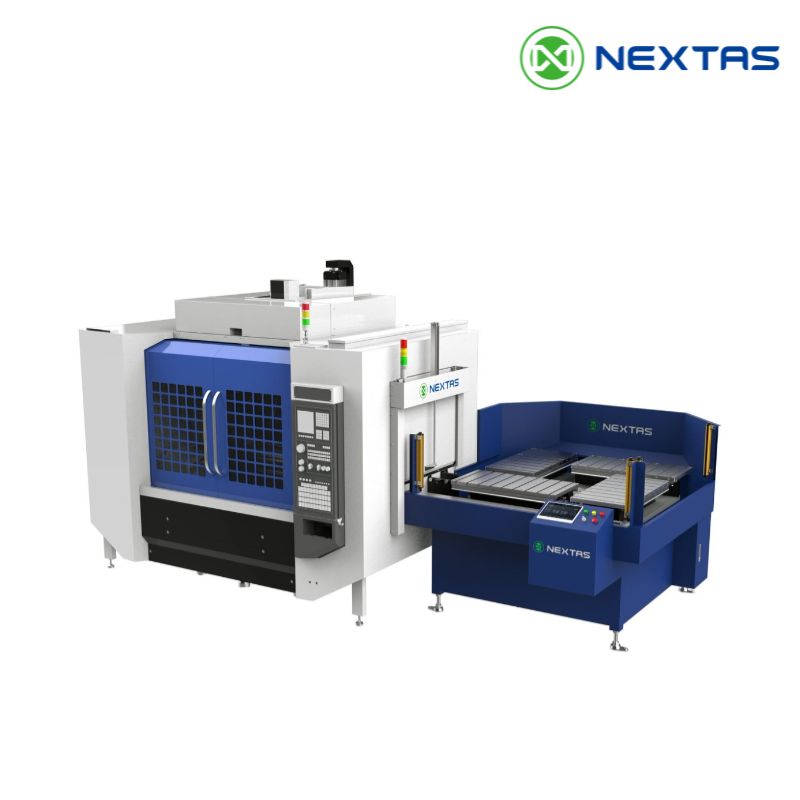
Automatic Pallet Changer
Maximize machine uptime with straightforward, automated pallet changes for continuous production.
View DetailsRelated Articles
Gain insights from our experts on how to optimize your manufacturing processes.
Efficiency Tips
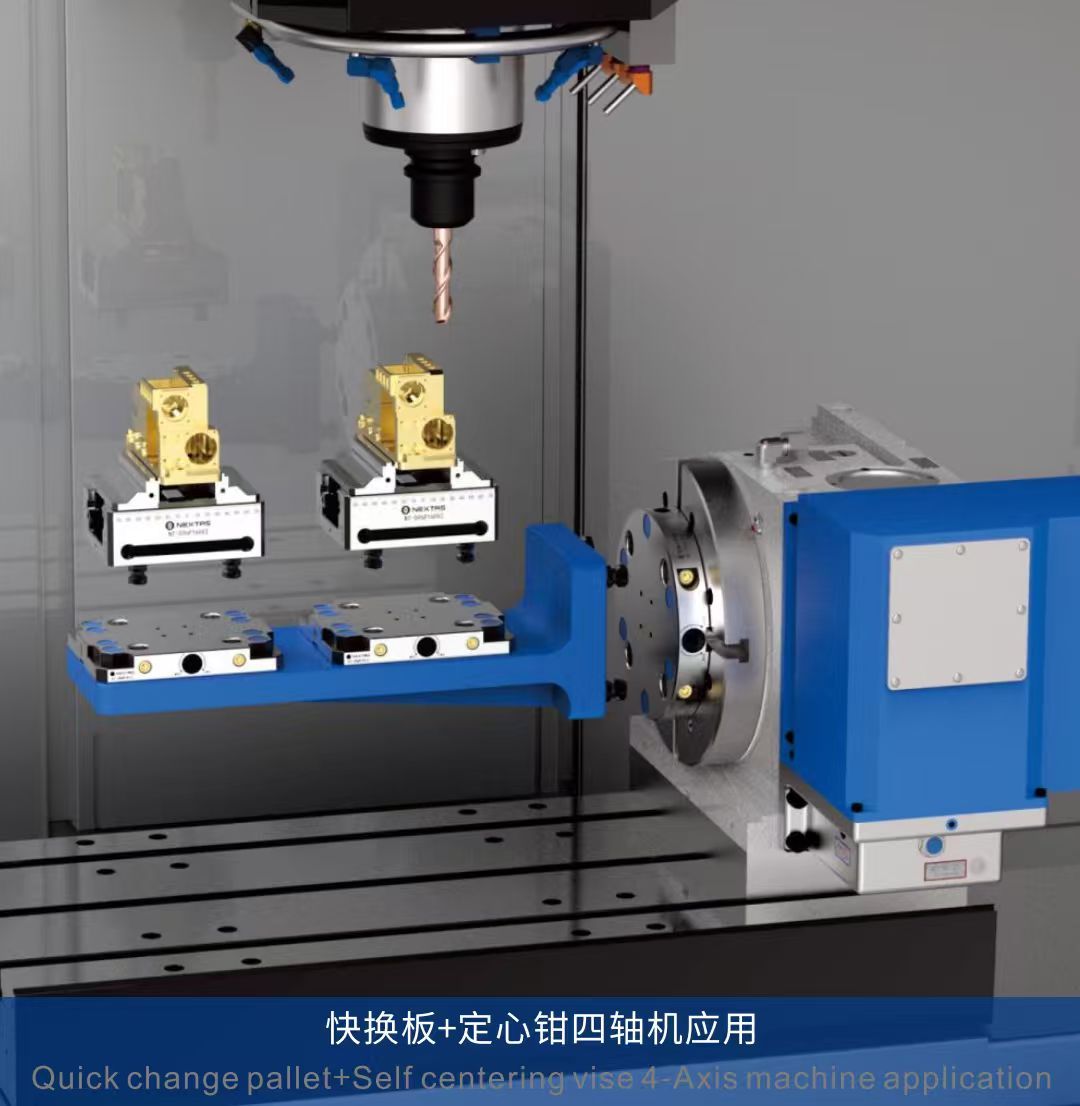
enable 30%+ CNC machining efficiency with the Nextas self-centering vise
Read More
Productivity
High-performance zero-point clamping plates: improve your machining efficiency
Read More
Expert Insights