Blog

≤0.01mm Repeatability Pneumatic Vise: High-Precision for CNC Machining Centers

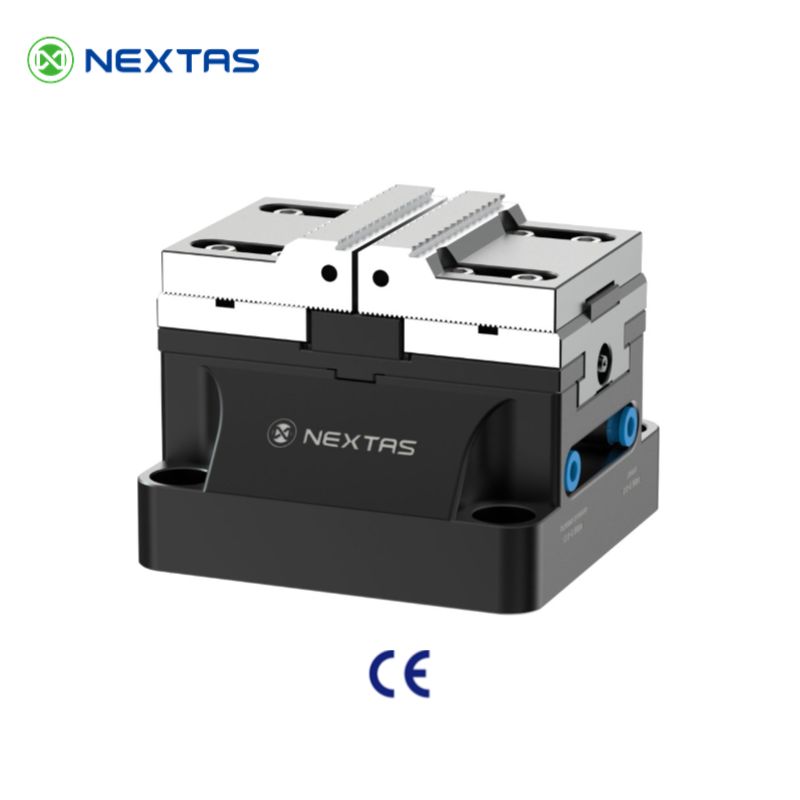
The ≤0.01mm repeatability pneumatic vise with 4000 kgf clamping force transforms CNC machining centers, boosting precision, reducing scrap, and enabling automation.

Published on September 26, 20255 min read
Table of contents
Nextas

Need help narrowing down the right setup?

Share your machine model, material, workpiece size, and tolerance target. We will help you shortlist a practical workholding path.

  • Machine + material review
  • Fixture stack-up suggestions
  • Fast reply via WhatsApp or form

Why Repeatability Is Non-Negotiable in CNC Machining

Repeatability refers to a vise’s ability to return to the exact same clamping position and apply consistent force across every cycle. For CNC machining centers—where parts are often produced in batches of hundreds or thousands—even a tiny deviation (as small as 0.02mm) can lead to catastrophic results: failed quality checks, wasted raw materials, delayed shipments, and damaged customer trust.

A ≤0.01mm repeatability pneumatic vise ensures that every part is clamped in the same position, every cut aligns with the design, and nearly 100% of parts pass inspection. This level of consistency is critical in aerospace, where components require ultra-precise machining to withstand extreme conditions, and in medical manufacturing, where tight tolerances ensure patient safety. For CNC shops serving these industries, this vise isn’t just a tool—it’s a safeguard against costly errors and reputational damage.

Key Features of the ≤0.01mm Repeatability Pneumatic Vise

Top-tier models combine advanced engineering, durable materials, and user-centric design to meet the demands of high-precision CNC machining. Below are the core features that make this vise an indispensable asset:

  • Ultra-Precise Repeatability (≤0.01mm): The vise body is made from FCD60 ductile iron, known for its high rigidity and resistance to deformation. A built-in lubrication system and a toothed strip guide rail design eliminate play and ensure the jaws always return to the exact same position.
  • Pneumatic-Hydraulic Booster Technology: Using Pascal’s principle, the vise converts standard factory air pressure into a massive clamping force of 4000 kgf. This provides the power needed for heavy-duty operations without complex hydraulic pumps.
  • Sealed Design for Harsh Environments: A fully sealed internal mechanism blocks chips, coolant, and contaminants from entering critical components, preserving repeatability and extending the vise's lifespan even in high-volume shops.
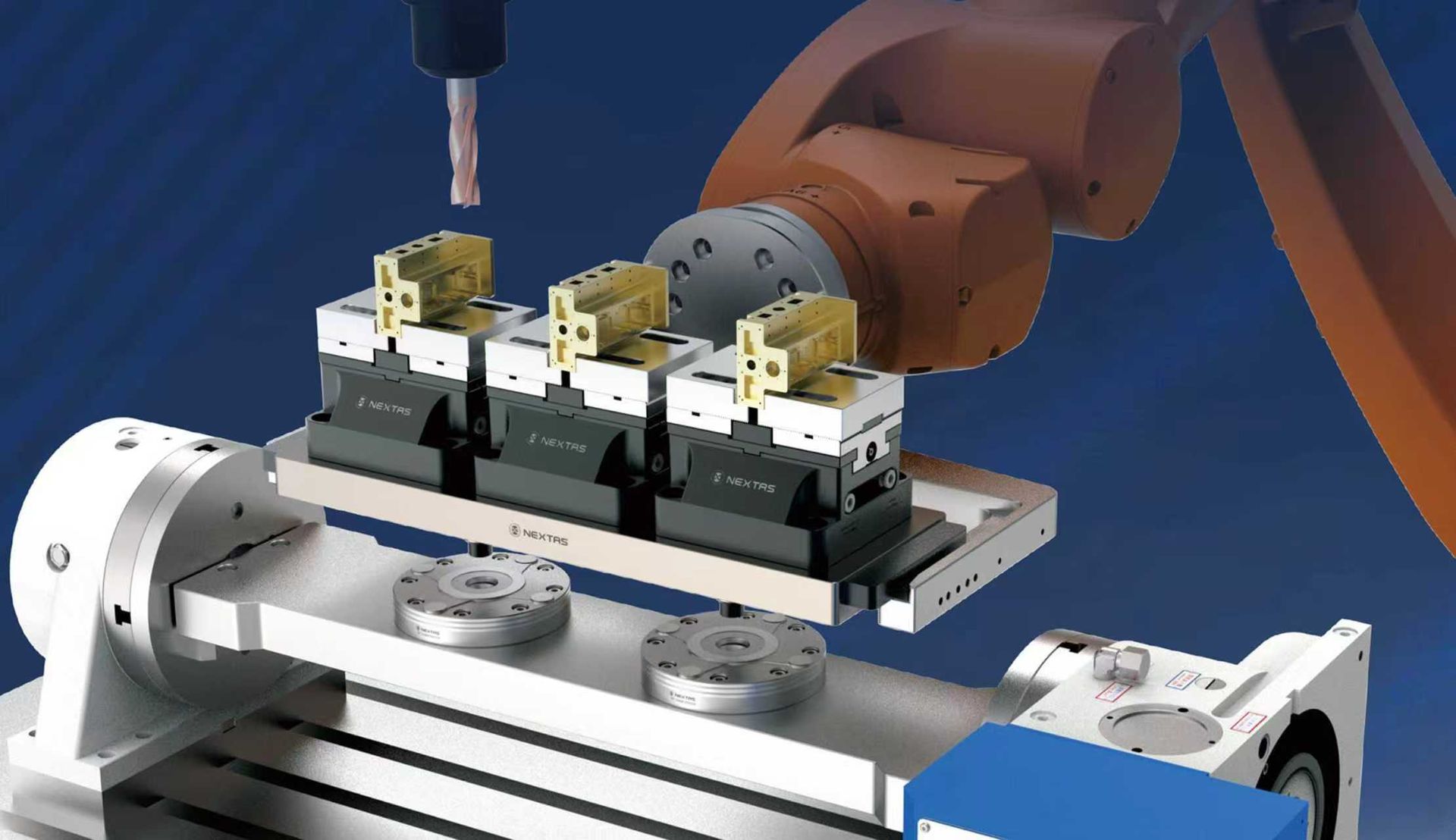
  • Flexible Integration with CNC Workflows: Standard keyways, zero-point clamping compatibility, and M-code integration allow the vise to fit directly into any automated production line, enabling 24/7 unmanned operation.

Real-World Applications and Value

Across industries, the impact of this vise is most visible in jobs where the part must return to the same datum shift after shift and operator after operator:

  • Precision aluminum and steel components: stable clamping reduces offset drift when multiple parts are loaded through the same program.
  • Medical and electronics parts: clean, repeatable loading matters when thin walls, small tools, or cosmetic surfaces leave little room for rework.
  • Aerospace and difficult alloys: secure holding helps control chatter and keeps heavy roughing passes from pulling the part out of position.
  • Robot-tended CNC cells: a consistent jaw position and predictable open/close behavior make automatic loading safer and easier to validate.

Where this vise earns its keep first

A pneumatic vise usually creates the fastest return when your team is already running repeat jobs, but too much time is still spent on manual tightening, clamping inconsistency, or re-touching offsets after every load. Shops often feel the difference first on medium-volume families where setup time, inspection failures, or operator variation are quietly eating margin even though the machine itself is capable.

It is also a strong option when you want to standardize one clamp interface across several machines. That makes operator training easier, simplifies spare-jaw planning, and creates a cleaner path into automation later because the workholding behavior is already predictable.

Pre-purchase checklist for a pneumatic vise

  • Confirm jaw opening, stroke, and clamping force match your smallest and largest part families.
  • Check whether coolant, chips, and abrasive dust can reach the drive mechanism or locating faces.
  • Review how the vise will be mounted on 3-axis, 4-axis, or 5-axis tables without sacrificing tool access.
  • Decide whether you need clamp confirmation, pressure monitoring, or M-code integration from day one.
  • Verify that soft-jaw changes, cleaning, and maintenance can be done quickly by the actual operators on the machine.

A Strategic Investment for Modern Machining

For CNC machining centers focused on precision, efficiency, and scalability, the ≤0.01mm repeatability pneumatic vise is more than a tool—it’s a strategic investment. Its ultra-precise repeatability reduces variation at the source, while pneumatic actuation shortens repetitive operator tasks and helps the machine return to cutting sooner.

The best results come when the vise is matched to the real workflow: part geometry, material behavior, chip load, jaw strategy, and automation plans. When those pieces line up, a high-repeatability pneumatic vise can improve first-pass yield, reduce avoidable setup touches, and give the shop a much more stable platform for scaled production.

Comparison, Selection & Cost Guide (Quick Tables)

Use the quick tables below to choose the right workholding setup for jobs like “≤0.01mm Repeatability Pneumatic Vise: High-Precision for CNC Machining Centers”. We focus on changeover time, repeatability, automation readiness, and total cost—so you can make a confident choice fast.

Quick comparison: common workholding options

OptionBest forStrengthsWatch-outsTypical changeover
Zero-point system / zero-point clamping plateFrequent part changes, multi-part families, modular setupsFast repeatable locating, scalable, automation-readyNeeds clean interfaces; plan for chip control30–120 sec
Pneumatic viseHigh mix + unattended runs where cycle time mattersStable clamping force, easy automation, consistent loadingAir quality + pressure stability; safety interlocks1–3 min
Pneumatic Vise + pressure monitoringLights-out machining with consistent clampingRepeatable force, easy automation, stable loadingAir quality/pressure stability; add safety interlocks1–3 min
Self-centering viseSymmetric parts, 5-axis access, quick centeringCenters fast, reduces setup errors, good for 5-axisJaw travel limits; verify part envelope1–5 min
Hydraulic fixtureHigh-volume or high-clamp-force machiningStrong & stable, great for tight tolerancesHigher upfront cost; maintenance & leak checks5–20 min
Custom dedicated fixture / jigOne part, very stable process, repeat productionMax stability, lowest unit cost at scaleSlow to change; redesign needed for new parts10–60 min
Pallet changerParallel setup + spindle utilization gainsSetup off-machine, better OEE, easier lights-outNeeds process discipline + pallet standardsVaries (2–10 min off-machine)
FMS / pallet pool (automation)Many SKUs + long unattended windowsBest throughput + scheduling flexibilityHighest system complexity; needs planningN/A (system-level)

Fast selection: match your scenario

Your scenarioRecommended setupNotes
Unattended runs + short cycles (high mix)Pneumatic Vise + Pneumatic Zero-Point PlateUse FRL + dryer; add “air-low” alarm & dump valve.
1–10 pcs, frequent changeovers, < 0.02 mm targetsZero-point system + modular baseBuild a “standardized base” and swap top tooling.
10–200 pcs, operator present, mixed geometriesSelf-centering vise or pneumatic vise + soft jawsAdd quick jaw change + pre-set stops.
200+ pcs, high clamp force, stable part familyHydraulic fixture or dedicated fixtureOptimize for cycle time + tool access.
Lights-out / unmanned shift (2–8+ hours)Pneumatic vise + pallet changer or FMSPrioritize sensing, chip evacuation, and fail-safe clamping.

What affects price (and how to control it)

Cost driverWhy it changes priceHow to reduce cost
Air prep + sensorsDry/clean air and monitoring prevent scrap & downtimeUse a shared FRL station; start with basic pressure switch.
Repeatability requirement (e.g., ≤0.01 mm)Tighter repeatability needs higher precision interfaces and QCStandardize datums; use proven modules; avoid over-spec.
Changeover frequencyMore swaps reward quick-change systems (ROI grows fast)Measure setup time; prioritize the biggest bottleneck.
Automation level (sensors, interlocks, palletization)Adds hardware + integration timeStart with one cell; reuse components across machines.
Workpiece size & materialLarge/heavy parts need stronger clamping + bigger basesUse modular plates; right-size the fixture footprint.
Engineering time (custom vs modular)Custom design drives NRE costPrefer modular stacks; keep custom parts minimal.

Common mistakes (and quick fixes)

MistakeSymptomFix
Running with wet/dirty airForce drift, sticking, inconsistent clampAdd filter/dryer; schedule drain checks.
No pressure monitoringRandom scrap during nights/weekendsInstall pressure switch + interlock the cycle.
Skipping chip control on locating surfacesRepeatability drifts; “mystery” setup errorsAdd air blast, covers, and a cleaning routine.
Over-clamping thin partsWarping, chatter, tolerance issuesUse proper jaw support + controlled clamping force.
No standard datum / pallet standardEvery setup becomes a one-offDefine a shop standard (datums, pallet, bolt pattern).
Choosing by lowest price onlyHigher labor cost + downtimeEvaluate total cost: labor, scrap, changeover time.

Want a recommendation for your parts? Send us your machine model, material, and tolerance target — we’ll suggest a practical setup.

Frequently Asked Questions about this Pneumatic Vise

How does this ≤0.01mm pneumatic vise differ from a standard hydraulic vise?

This pneumatic-hydraulic booster vise provides high clamping force (4000 kgf) like a hydraulic vise but uses only standard factory air pressure, eliminating the need for complex and messy hydraulic pumps. Its key advantage is the ≤0.01mm repeatability, which is often superior to standard vises, maintaining consistency in automated mass production.

How does it achieve 4000 kgf clamping force with only 6 bar of air pressure?

The vise uses a built-in air-to-oil booster. It follows Pascal's principle, where a large-area pneumatic piston acts on a small-area hydraulic piston. This significantly multiplies the input air pressure, converting low-pressure air (e.g., 6 bar) into high-pressure hydraulic clamping force (4000 kgf).

Is this vise suitable for both horizontal and vertical machining centers?

Yes, it is suitable for both. Its sealed body protects the internal mechanism from chips and coolant, making it ideal for vertical machining centers where chip problems are severe. Its high clamping force and rigidity are also well-suited for heavy roughing operations in horizontal machining centers.

Can I integrate this pneumatic vise with my CNC's M-code for automation?

What kind of maintenance does this sealed pneumatic vise require?

Maintenance is minimal compared to other vises. The sealed design prevents the ingress of chips and coolant, which are major causes of wear. Regular maintenance includes wiping down the exterior, checking air lines for leaks, and periodically adding lubricant to the built-in lubrication system as per the manual to ensure smooth jaw movement.

Keep exploring

Keep reading with closely matched guides on vise selection, repeatability, jaw strategy and multi-face machining workflow.

Browse all articles →

Match the hardware

These product pages are the most direct next step if you are comparing vise hardware, quick-change compatibility and real production fit.

Browse all products →

Planning a pneumatic clamping setup?

Tell us your workpiece range, cycle time, and control method. Our engineering team can help review whether a pneumatic vise is the right fit for repeatable clamping and unattended machining.

Request Pneumatic Vise Advice →
Get Engineering Advice →