Blog

NextasTech Zero Point Positioning System: Successful Application at SAVANT Semiconductor Equipment Communication Factory

See how SAVANT upgraded semiconductor communication module machining with the NextasTech Zero Point Positioning System—≤0.003mm repeatability, fail-safe self-locking, 30-second changeovers, and seamless FMS integration.

Published on January 29, 20264 min read
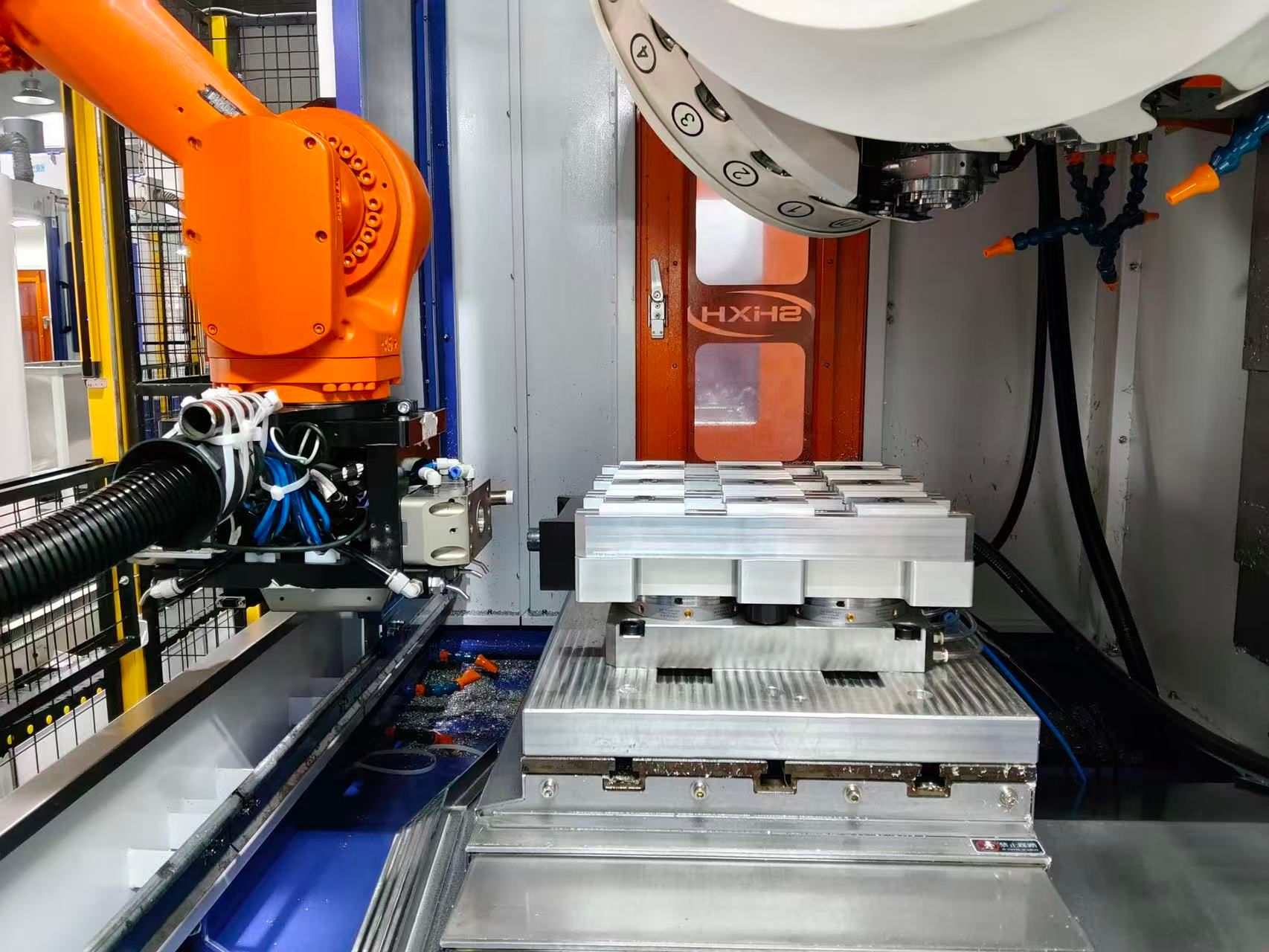
NextasTech Zero Point Positioning System applied in semiconductor equipment communication machining
Case study highlight: SAVANT integrates NextasTech Zero Point Positioning with an automated production workflow.

In semiconductor equipment communication manufacturing, micron-level positioning errors can turn into signal instability, scrap, and late deliveries. SAVANT—an established manufacturer of semiconductor communication equipment and core components—needed a way to increase throughput without compromising repeatability across multiple stations.

After technical evaluation and benchmarking, SAVANT deployed the NextasTech Zero Point Positioning System and integrated it with its existing NextasTech FMS (Flexible Manufacturing System). The outcome was a faster, more stable, and more connected machining workflow—built for small-batch, high-mix production.

Why semiconductor communication machining needs zero-point accuracy

Semiconductor communication modules and signal transmission components are unforgiving: tolerances are tight, and part-to-part consistency matters as much as absolute accuracy. The “core demands” SAVANT highlighted were:

  • Precision & repeatability across machining, inspection, and transfer steps
  • Stability under high-speed cutting to avoid micro-vibration and part shift
  • Efficiency: rapid changeovers and predictable cycle times
  • Automation compatibility so robotics and FMS workflows stay uninterrupted
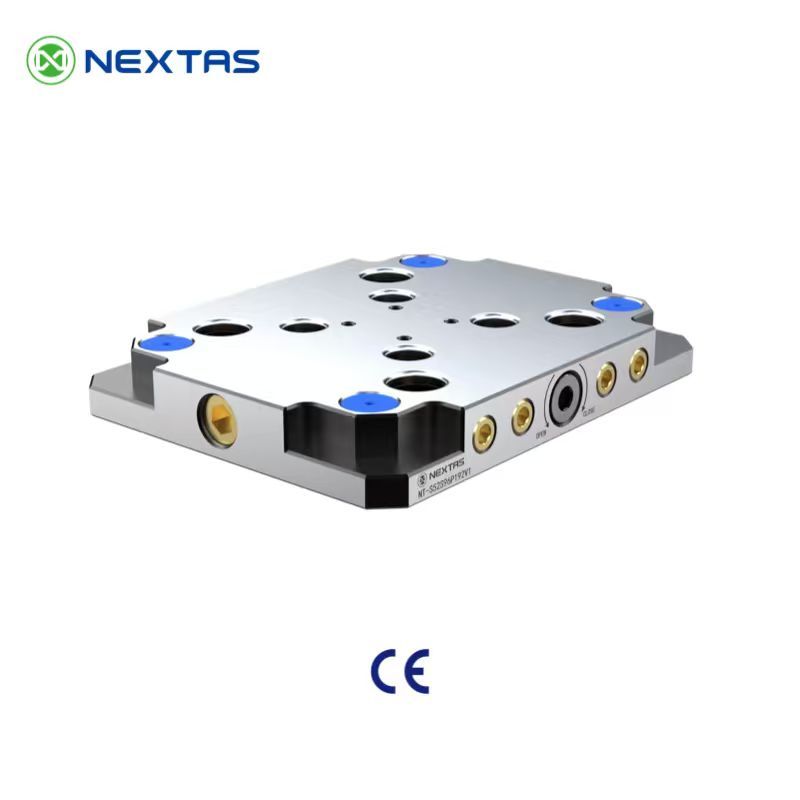
High-precision workholding and positioning for semiconductor communication components

SAVANT’s bottlenecks before NextasTech

Before adopting the NextasTech solution, SAVANT’s precision machining lines were slowed down by common “legacy” constraints:

  • Long manual calibration & clamping — up to 30 minutes per workpiece changeover
  • Inconsistent positioning — manual operation led to deviations up to 0.01mm, contributing to a 3–5% defect rate for high-precision parts
  • Fragmented process connectivity — isolated stations reduced automation continuity and increased manual intervention

What SAVANT needed was a positioning “backbone” that could anchor every station to the same reference—fast.

How NextasTech solved it: key technical advantages

1) Micron-level repeatability for multi-station consistency

The system delivers repeat positioning accuracy of ≤0.003mm, aligning with NextasTech’s benchmark of ±0.002mm precision. For SAVANT, this meant:

  • Stable zero-point reference between 5-axis machining centers and inspection stations
  • Less re-calibration during transfers
  • Fewer defects linked to positioning drift

2) Fail-safe spring-actuated mechanical self-locking

Clamping force is maintained by powerful springs, with pneumatic pressure (typically 0.5–0.8MPa) used only for unlocking. SAVANT configured modules (e.g., around 18kN for medium-load parts) within a broader range of 4kN–40kN. This “fail-safe” approach keeps workpieces secure even during air interruptions—ideal for high-speed cutting (up to 12,000rpm).

3) Second-scale changeovers (up to ~90% setup-time reduction)

With tool-free rapid clamping and replacement, SAVANT reduced changeover time from 30 minutes to around 30 seconds—a reported 92% reduction. This flexibility is especially valuable for high-mix semiconductor communication orders.

4) Seamless synergy with NextasTech FMS for intelligent flow

The system is designed for automation, with pneumatic control ports, status detection capability, and self-cleaning air channels. At SAVANT, the integrated workflow supports:

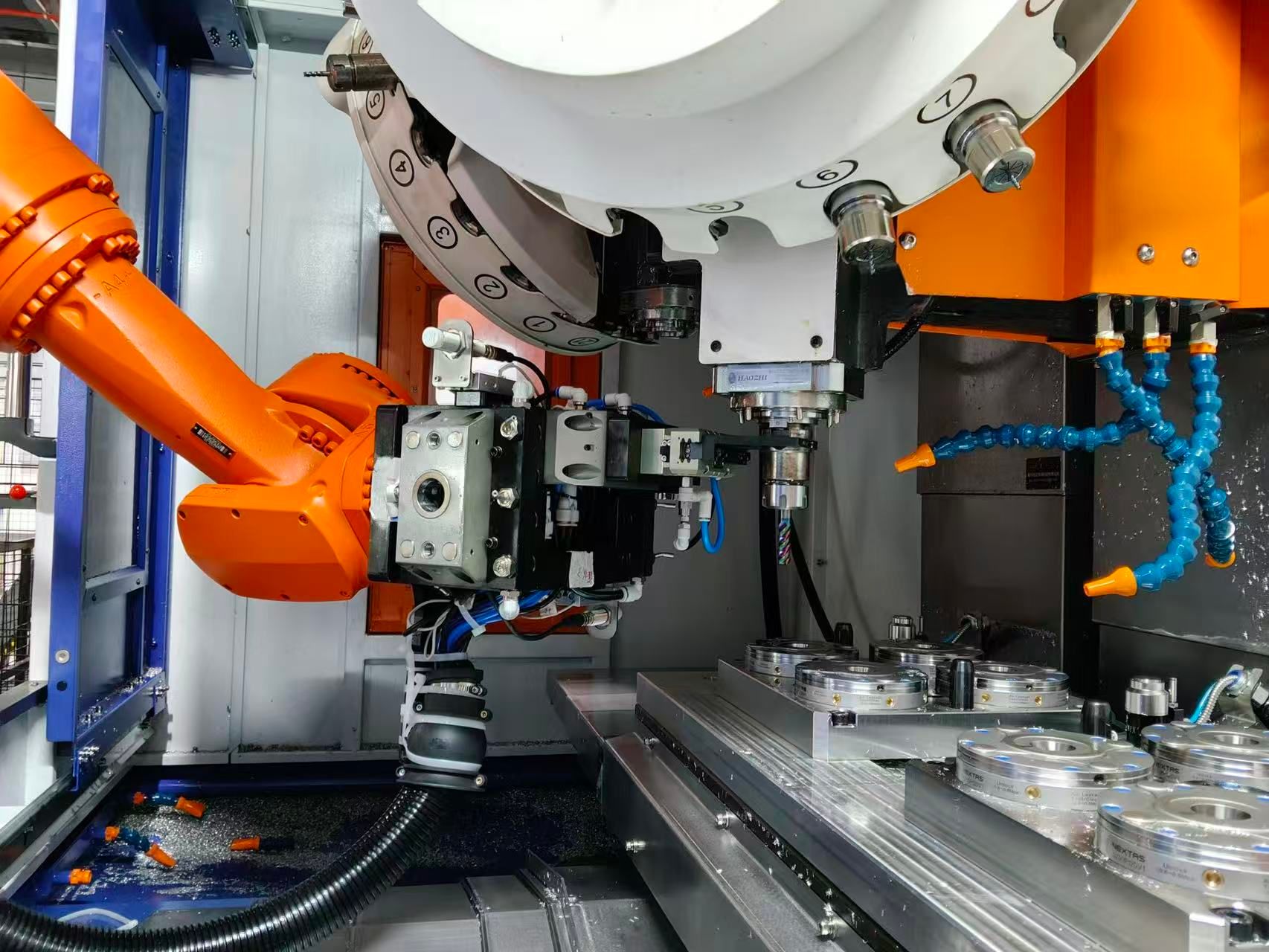
  • Robotic loading → zero-point positioning → machining → transfer → inspection
  • Reduced manual handoffs (lower human-error exposure)
  • Real-time clamped/unclamped signals to PLC for safer unmanned shifts

5) Industrial-grade durability for harsh shop conditions

Hardened stainless steel (surface hardness roughly HRC 58–62) with corrosion-resistant coatings helps the system resist coolant and chip exposure. A built-in self-cleaning blast during unlocking helps keep interfaces debris-free, reducing maintenance frequency and helping preserve long-term repeatability.

Measured results after deployment

After full deployment on SAVANT’s semiconductor equipment communication line, reported outcomes included:

  • +38% throughput increase for semiconductor communication modules
  • Defect rate due to positioning errors reduced from 3.2% to 0.15% (qualification rate > 99.85%)
  • -35% order delivery time (cycle time improvement)
  • -22% labor cost, supported by automated process integration
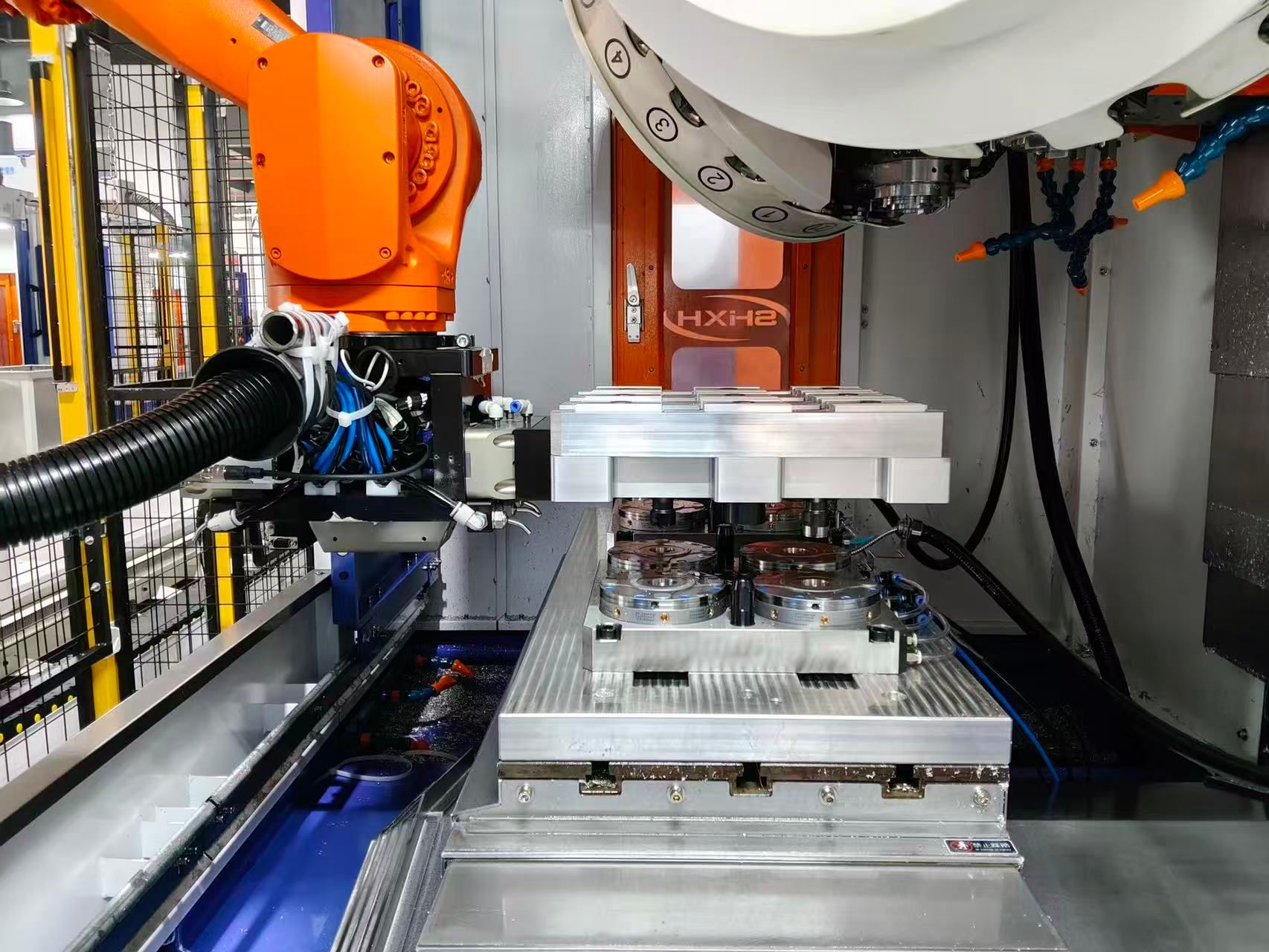
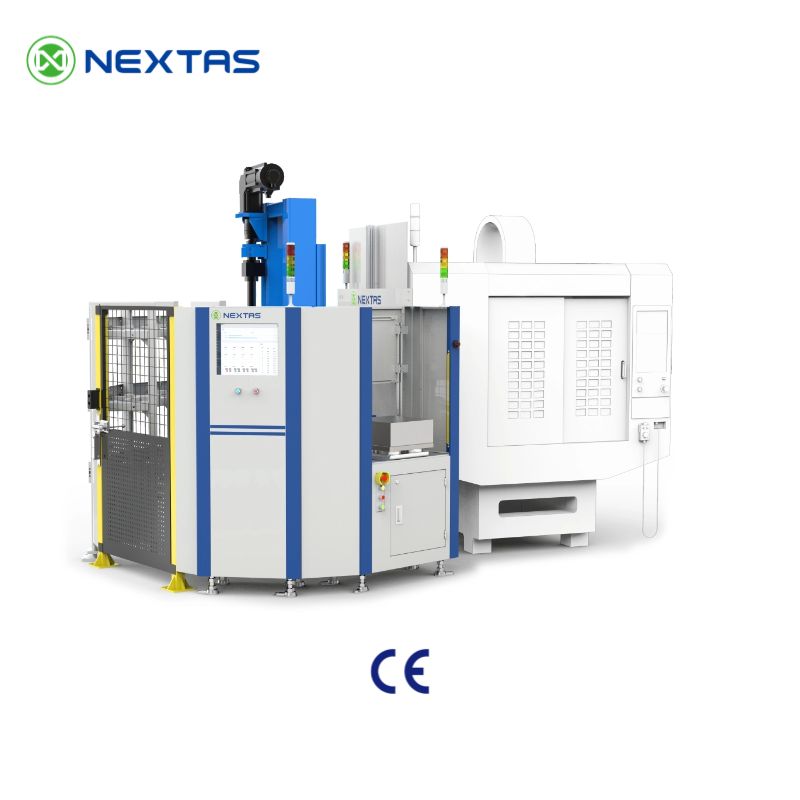
Automated production line using NextasTech zero-point positioning and FMS integration

Implementation checklist for your shop

If you’re planning a similar upgrade, here’s a practical checklist to keep the rollout smooth:

  1. Map your stations: machining, inspection, transfer, pallet storage.
  2. Define load profiles: required clamping force per workpiece family.
  3. Standardize your reference: align fixtures/pallets around a shared zero-point scheme.
  4. Plan automation signals: clamped/unclamped detection into PLC/robot logic.
  5. Validate repeatability: confirm across the full route (machine → inspection → machine).
  6. Maintain cleanliness: use self-cleaning + routine checks to protect interface precision.

Explore NextasTech Zero Point Systems

Want to evaluate a configuration for your parts? Start here:

Tip: If you’re currently battling long setup times, inconsistent transfer accuracy, or automation bottlenecks, zero-point positioning is often the fastest “multiplier” you can deploy—because it improves every downstream step.

Comparison, Selection & Cost Guide (Quick Tables)

Use the quick tables below to choose the right workholding setup for jobs like “NextasTech Zero Point Positioning System: Successful Application at SAVANT Semiconductor Equipment Communication Factory”. We focus on changeover time, repeatability, automation readiness, and total cost—so you can make a confident choice fast.

Quick comparison: common workholding options

OptionBest forStrengthsWatch-outsTypical changeover
Zero-point system / zero-point clamping plateFrequent part changes, multi-part families, modular setupsFast repeatable locating, scalable, automation-readyNeeds clean interfaces; plan for chip control30–120 sec
Zero Point Clamping Plate + pallet standardsHigh repeatability + fast swaps on fixtures/palletsStable datum, scalable modularity, automation‑readyCleanliness + stud compatibility; plan chip control20–60 sec
Pneumatic viseHigh mix + unattended runs where cycle time mattersStable clamping force, easy automation, consistent loadingAir quality + pressure stability; safety interlocks1–3 min
Self-centering viseSymmetric parts, 5-axis access, quick centeringCenters fast, reduces setup errors, good for 5-axisJaw travel limits; verify part envelope1–5 min
Hydraulic fixtureHigh-volume or high-clamp-force machiningStrong & stable, great for tight tolerancesHigher upfront cost; maintenance & leak checks5–20 min
Custom dedicated fixture / jigOne part, very stable process, repeat productionMax stability, lowest unit cost at scaleSlow to change; redesign needed for new parts10–60 min
Pallet changerParallel setup + spindle utilization gainsSetup off-machine, better OEE, easier lights-outNeeds process discipline + pallet standardsVaries (2–10 min off-machine)
FMS / pallet pool (automation)Many SKUs + long unattended windowsBest throughput + scheduling flexibilityHighest system complexity; needs planningN/A (system-level)

Fast selection: match your scenario

Your scenarioRecommended setupNotes
High‑mix work; target repeatability ≤0.01 mmZero Point Clamping System + standard pallet/stud kitDefine a master datum; add chip covers; get a layout for layout help.
1–10 pcs, frequent changeovers, < 0.02 mm targetsZero-point system + modular baseBuild a “standardized base” and swap top tooling.
10–200 pcs, operator present, mixed geometriesSelf-centering vise or pneumatic vise + soft jawsAdd quick jaw change + pre-set stops.
200+ pcs, high clamp force, stable part familyHydraulic fixture or dedicated fixtureOptimize for cycle time + tool access.
Lights-out / unmanned shift (2–8+ hours)Pneumatic vise + pallet changer or FMSPrioritize sensing, chip evacuation, and fail-safe clamping.

What affects price (and how to control it)

Cost driverWhy it changes priceHow to reduce cost
Pallet/stud standardizationMore pallets/studs costs more upfront but saves changeover timePhase in pallets; reuse patterns across machines.
Repeatability requirement (e.g., ≤0.01 mm)Tighter repeatability needs higher precision interfaces and QCStandardize datums; use proven modules; avoid over-spec.
Changeover frequencyMore swaps reward quick-change systems (ROI grows fast)Measure setup time; prioritize the biggest bottleneck.
Automation level (sensors, interlocks, palletization)Adds hardware + integration timeStart with one cell; reuse components across machines.
Workpiece size & materialLarge/heavy parts need stronger clamping + bigger basesUse modular plates; right-size the fixture footprint.
Engineering time (custom vs modular)Custom design drives NRE costPrefer modular stacks; keep custom parts minimal.

Common mistakes (and quick fixes)

MistakeSymptomFix
Ignoring interface cleanlinessRepeatability drift, random tolerance errorsUse covers + air blast + cleaning routine.
Mixing incompatible studs/palletsHard‑to‑debug positioning errorsLock one standard; document torque & specs.
Skipping chip control on locating surfacesRepeatability drifts; “mystery” setup errorsAdd air blast, covers, and a cleaning routine.
Over-clamping thin partsWarping, chatter, tolerance issuesUse proper jaw support + controlled clamping force.
No standard datum / pallet standardEvery setup becomes a one-offDefine a shop standard (datums, pallet, bolt pattern).
Choosing by lowest price onlyHigher labor cost + downtimeEvaluate total cost: labor, scrap, changeover time.

Want a recommendation for your parts? Send us your machine model, material, and tolerance target — we’ll suggest a practical setup.

Frequently Asked Questions

How does the NextasTech Zero-Point Plate achieve 90% faster setup times?

Traditional setups require manually indicating and aligning fixtures, which can take 45-60 minutes per job change. The NextasTech Zero-Point system establishes a permanent "zero" reference on your machine table. Fixtures equipped with clamping studs drop into the plate and lock instantly with ≤.005mm repeatability. This eliminates the need for re-indicating, allowing operators to swap fixtures in under 5 minutes.

Can I use my existing Kurt or Schunk vises with this system?

Absolutely. One of the core advantages of the NextasTech system is its universal compatibility. You do not need to buy new vises. By simply attaching NextasTech clamping studs to the bottom of your existing Kurt, Schunk, or other standard vises, they become instantly compatible with the Zero-Point Plate. This allows shops to leverage their existing tooling investment while upgrading their workflow efficiency.

Should I choose the Hardened Steel or 7075 Aluminum version?

The choice depends on your machine and application. Hardened Tool Steel is recommended for heavy-duty milling (VMCs/HMCs) where rigidity and vibration dampening are paramount. It offers maximum longevity. 7075-T6 Aluminum is ideal for machines with limited weight capacity or for pallet automation systems, as it is 60% lighter while still maintaining high accuracy. Both versions feature corrosion-resistant treatments.

How does the system handle chips and coolant in a production environment?

The NextasTech plate is engineered with sealed pneumatic modules specifically designed to block chips and coolant ingress. The hardened locating cones (HRC 60-62) are self-cleaning during the locking process. We recommend a simple daily air blast or visual check, and monthly oiling to keep the mechanism operating smoothly for years, even in heavy chip-making environments.

Does the ≤.005mm accuracy degrade over time?

The system is built for long-term stability. The critical locking components are case-hardened and precision-ground to resist wear. Unlike cheaper alternatives that may lose tolerance after a few hundred changes, NextasTech plates are tested to withstand thousands of fixture changes while maintaining original flatness and repeatability. Regular maintenance ensures this precision lasts for the life of the plate.

Ready to Eliminate Setup Downtime?

Join elite machinists who trust NextasTech for micron-perfect accuracy and speed. Whether you need standard grids or custom sizing, we deliver.

Request a Quote & CAD Files →
Request a Technical Consultation →