Blog

Hydraulic Fixture Systems in Automotive Manufacturing: Precision, Speed, and ROI

A practical guide to hydraulic fixture systems for automotive machining, focused on real part families, fixture architecture, and where custom hydraulic workholding earns its keep.

Published on September 8, 20257 min read
Table of contents
Nextas

Need help narrowing down the right setup?

Share your machine model, material, workpiece size, and tolerance target. We will help you shortlist a practical workholding path.

  • Machine + material review
  • Fixture stack-up suggestions
  • Fast reply via WhatsApp or form
Hydraulic fixture systems for automotive manufacturing
Hydraulic fixture systems secure heavy, complex automotive parts for precise, repeatable production.

Why hydraulic fixtures matter in automotive machining

Automotive machining rarely rewards generic holding. Cylinder heads, transmission covers, motor housings, rear subframes, and reinforced brackets all present different clamp directions, support needs, and distortion risks. A custom hydraulic fixture earns its place when the process needs repeatable force, stable location, and faster operator loading than manual clamping can deliver.

On the current Nextas custom hydraulic fixture offering, the positioning message is practical rather than flashy: rigid datum location, repeatable clamping force, automation-ready interfaces, and typical repeatability targets down to about ≤ 0.005 mm depending on the fixture architecture and part.

Where custom hydraulic fixtures outperform universal workholding

The catalogue already shows the type of automotive jobs where hydraulic workholding makes sense: engine head fixtures, transmission end-cap fixtures, vertical-lathe motor-casing fixtures, new-energy-vehicle rear-subframe fixtures, heavy truck clamp-body fixtures, and reinforced engine-mount fixtures.

Part familyWhy hydraulic helpsDesign focus
Cylinder heads / upper blocksMultiple sealing and machining faces need stable location and repeatable load pathsControl clamp sequence, support thin-wall areas, protect datum surfaces
Transmission covers / housingsMixed bosses and irregular casting geometry make manual clamping inconsistentUse locators plus work supports to prevent lift and rocking
Motor casings on vertical lathesRound or thin-wall parts need even force and repeatable centeringBalance clamp points and keep service access for seals and hoses
Rear subframes / structural partsLarge parts benefit from multi-point holding with faster, repeatable load cyclesManage support span, loading ergonomics, and pallet transfer

What makes a hydraulic fixture stable in production

  • Good locators first: hydraulic clamps cannot compensate for weak datum strategy.
  • Right clamp mix: swing clamps, pull-down or toe clamps, cylinders, and work supports each solve a different access problem.
  • Controlled force path: thin-wall and cast parts need even-force strategies, not just more pressure.
  • Service-friendly routing: hoses, seals, and sensors should be reachable without dismantling the full fixture.
  • Automation-ready interface: pallet handling, sensors, and part-present logic matter if the line will later scale beyond manual loading.

Hydraulic vs. pneumatic vs. manual clamping

MethodBest fitMain advantageWatch-out
HydraulicComplex parts, higher loading, repeat production, automation-ready linesStable, repeatable clamping with flexible custom architectureNeeds good circuit design and preventive maintenance
PneumaticFaster cycling on lighter parts or simpler automation tasksQuick actuation and simpler plumbingUsually less suitable for the heaviest or most distortion-sensitive parts
Manual / mechanicalLow-volume jobs, prototypes, or simple partsLow initial cost and easy setupHigher operator variation and slower repeat loading

ROI checklist for automotive plants

Hydraulic workholding usually pays back when the process cost of inconsistent clamping is already visible. That may show up as rework, operator time, awkward loading, or fixture changes that take too long for a stable production rhythm.

A custom hydraulic fixture is usually worth studying when...

  • The same part family runs often enough that a dedicated fixture will actually be reused.
  • Manual clamping time is long compared with cutting time.
  • The part has enough complexity that clamp sequence and support strategy affect quality.
  • You need better ergonomics, part-present sensing, or a clear path toward pallet or automation integration.

Final thoughts

In automotive machining, the best hydraulic fixture is not just a stronger clamp. It is a part-specific holding system with the right locators, support strategy, service access, and cycle-time logic for the line it serves.

Comparison, Selection & Cost Guide (Quick Tables)

Use the quick tables below to choose the right workholding setup for jobs like “Hydraulic Fixture Systems in Automotive Manufacturing: Precision, Speed, and ROI”. We focus on changeover time, repeatability, automation readiness, and total cost—so you can make a confident choice fast.

Quick comparison: common workholding options

OptionBest forStrengthsWatch-outsTypical changeover
Zero-point system / zero-point clamping plateFrequent part changes, multi-part families, modular setupsFast repeatable locating, scalable, automation-readyNeeds clean interfaces; plan for chip control30–120 sec
Pneumatic viseHigh mix + unattended runs where cycle time mattersStable clamping force, easy automation, consistent loadingAir quality + pressure stability; safety interlocks1–3 min
Self-centering viseSymmetric parts, 5-axis access, quick centeringCenters fast, reduces setup errors, good for 5-axisJaw travel limits; verify part envelope1–5 min
Hydraulic fixtureHigh-volume or high-clamp-force machiningStrong & stable, great for tight tolerancesHigher upfront cost; maintenance & leak checks5–20 min
Customized Hydraulic Fixture + quick couplersHigh clamp force + tight tolerances under heavy cutsRigid, stable, excellent for volume productionLeak checks; maintenance and pressure control3–10 min
Custom dedicated fixture / jigOne part, very stable process, repeat productionMax stability, lowest unit cost at scaleSlow to change; redesign needed for new parts10–60 min
Pallet changerParallel setup + spindle utilization gainsSetup off-machine, better OEE, easier lights-outNeeds process discipline + pallet standardsVaries (2–10 min off-machine)
FMS / pallet pool (automation)Many SKUs + long unattended windowsBest throughput + scheduling flexibilityHighest system complexity; needs planningN/A (system-level)

Fast selection: match your scenario

Your scenarioRecommended setupNotes
High-volume machining (auto parts) with tight toleranceCustomized Hydraulic Fixture + standardized locatorsAdd pressure gauge + leak-down test to the checklist.
1–10 pcs, frequent changeovers, < 0.02 mm targetsZero-point system + modular baseBuild a “standardized base” and swap top tooling.
10–200 pcs, operator present, mixed geometriesSelf-centering vise or pneumatic vise + soft jawsAdd quick jaw change + pre-set stops.
200+ pcs, high clamp force, stable part familyHydraulic fixture or dedicated fixtureOptimize for cycle time + tool access.
Lights-out / unmanned shift (2–8+ hours)Pneumatic vise + pallet changer or FMSPrioritize sensing, chip evacuation, and fail-safe clamping.

What affects price (and how to control it)

Cost driverWhy it changes priceHow to reduce cost
Hydraulic manifold + safety valvesAdds reliability and reduces downtime, but increases BOMUse modular manifolds; standardize fittings across cells.
Repeatability requirement (e.g., ≤0.01 mm)Tighter repeatability needs higher precision interfaces and QCStandardize datums; use proven modules; avoid over-spec.
Changeover frequencyMore swaps reward quick-change systems (ROI grows fast)Measure setup time; prioritize the biggest bottleneck.
Automation level (sensors, interlocks, palletization)Adds hardware + integration timeStart with one cell; reuse components across machines.
Workpiece size & materialLarge/heavy parts need stronger clamping + bigger basesUse modular plates; right-size the fixture footprint.
Engineering time (custom vs modular)Custom design drives NRE costPrefer modular stacks; keep custom parts minimal.

Common mistakes (and quick fixes)

MistakeSymptomFix
Skipping leak-down checksClamp loss, scrap or tool breakAdd gauge + scheduled leak test; replace seals early.
Over-clampingPart distortion, poor surface finishUse pressure regulators; clamp only as needed.
Skipping chip control on locating surfacesRepeatability drifts; “mystery” setup errorsAdd air blast, covers, and a cleaning routine.
Over-clamping thin partsWarping, chatter, tolerance issuesUse proper jaw support + controlled clamping force.
No standard datum / pallet standardEvery setup becomes a one-offDefine a shop standard (datums, pallet, bolt pattern).
Choosing by lowest price onlyHigher labor cost + downtimeEvaluate total cost: labor, scrap, changeover time.

Want a recommendation for your parts? Send us your machine model, material, and tolerance target — we’ll suggest a practical setup.

Frequently Asked Questions

How do hydraulic fixtures handle the high-vibration environment of engine block milling?

They excel by providing high, consistent clamping force that effectively dampens vibration at the source. Unlike mechanical clamps that can loosen, hydraulic pressure remains constant, rigidly holding the engine block. This prevents micro-movements, resulting in better tool life, superior surface finishes, and consistent dimensional accuracy, even during heavy roughing cuts.

Are hydraulic fixtures compatible with automated robotic loading/unloading?

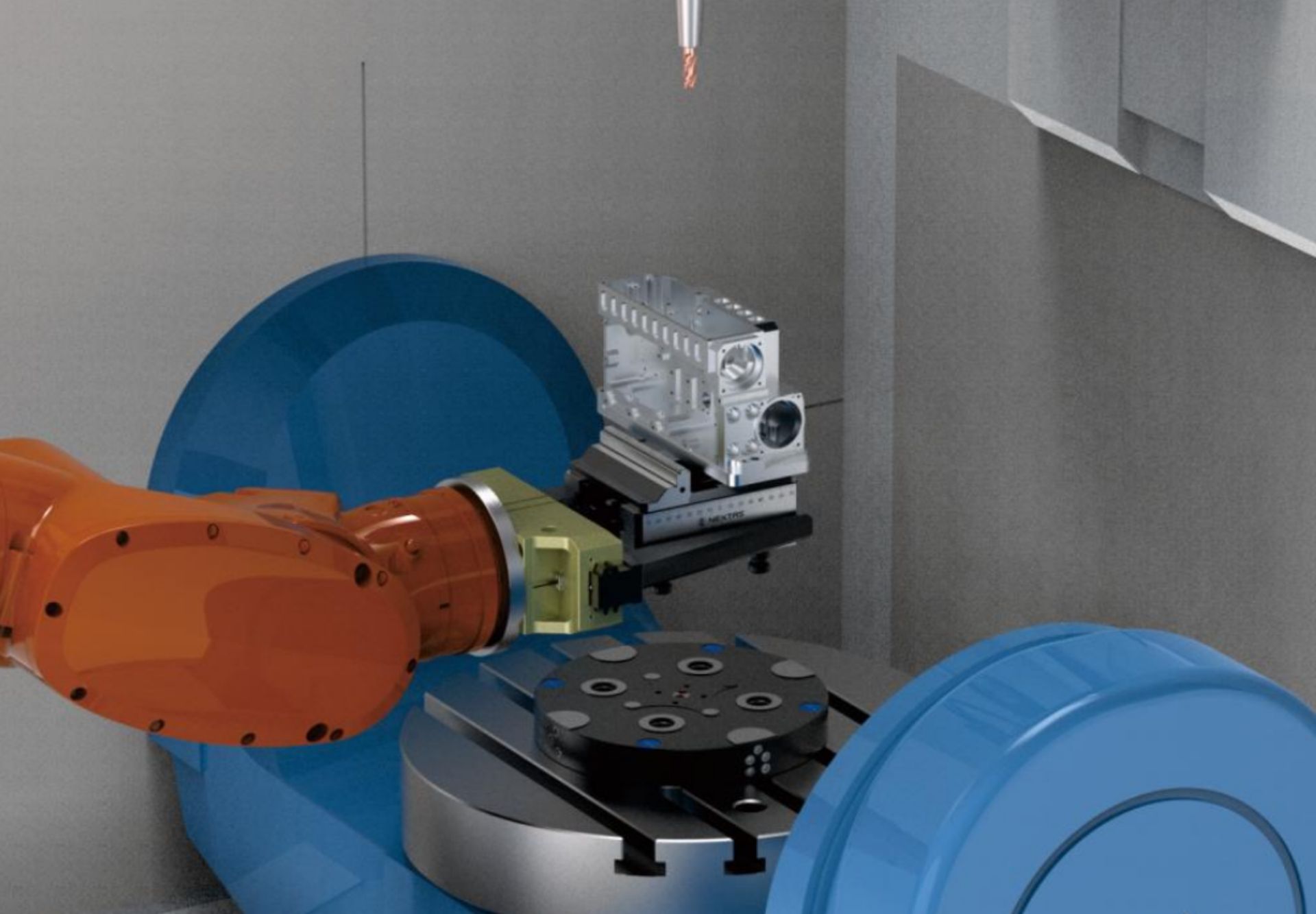
Yes, they are ideal for automation. Hydraulic lines can be routed through the machine table or robotic end-effectors for automatic connection. Furthermore, integrated pressure sensors and switches provide digital feedback (clamped/unclamped status) to the machine's PLC or robot controller. This maintains safe, automated cycles and confirms the part is securely held before machining begins.

What is the typical maintenance schedule for a hydraulic fixture in 24/7 automotive production?

For a 24/7 environment, we recommend a preventative maintenance schedule:

  • Daily: Visual check by operators for any hydraulic leaks or damaged hoses.
  • Weekly: Verify hydraulic pressure gauge readings match the required setpoints.
  • Quarterly: Inspect all seals and hoses for wear, cracking, or degradation. Check and clean hydraulic fluid filters.
  • Annually: Full system flush and fluid replacement, along with replacement of any worn seals or hoses.
Can one hydraulic fixture be used for multiple different part models (e.g., V6 vs. V8 engine blocks)?

Keep exploring

Continue with closely matched guides on custom fixture design, clamping strategy and production integration.

Browse all articles →

Match the hardware

These product pages are the most direct next step if you are matching custom workholding hardware to a specific part family or process.

Browse all products →

Need a fixture review for your part?

Send your drawing, datum strategy, and clamping constraints. Our team can review whether a custom pneumatic or hydraulic fixture is the right approach and what inputs matter most.

Request Fixture Engineering Review →
Get Engineering Advice →