Blog

Zero-Point System Compatible! NextasTech Self Centering Vise: Redefine Rapid Mold Changes with Precision & Automation

Redefine rapid mold changes with the NextasTech Self-Centering Vise. Featuring zero-point compatibility, ±0.002mm repeatability, and 35kN clamping force, it enables seamless automation and 5-axis precision.

Published on August 15, 20253 min read

Zero-Point Compatibility: From Setup Delays to Swift Transitions

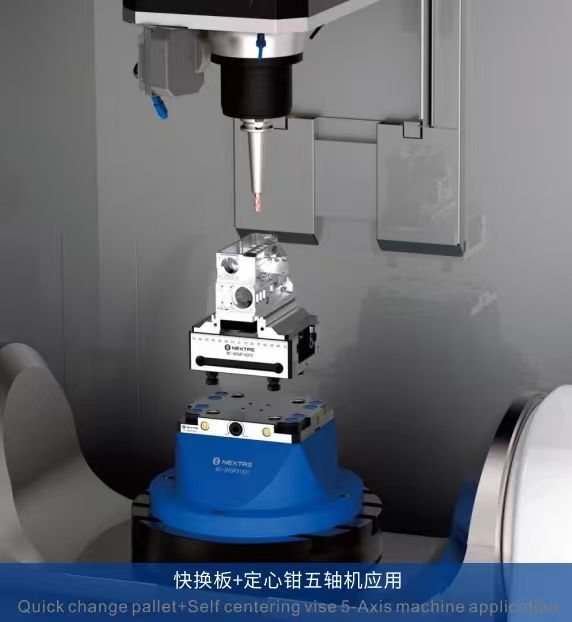
Mold changeovers are often the biggest bottleneck in high-volume or job-shop production. Traditional workholding requires painstaking manual alignment, calibration, and trial runs—wasting hours that could be spent on productive machining. The NextasTech Self Centering Vise eliminates this friction with its native zero-point system compatibility, engineered to integrate with both NextasTech zero-point solutions and leading industry brands.

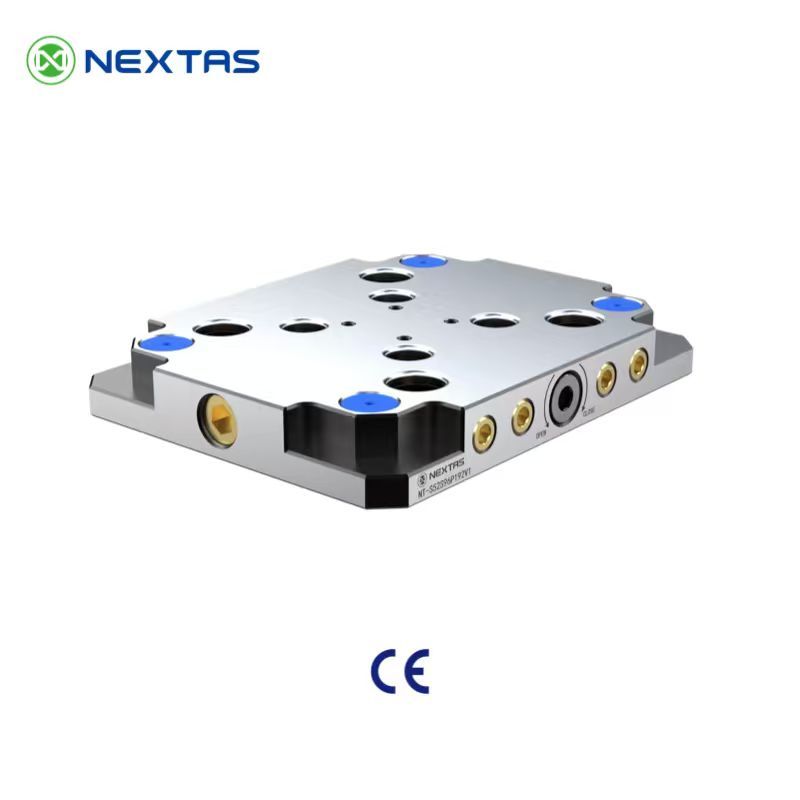
Featuring universal mounting interfaces (52mm/96mm spacing, tailored to model), the vise locks into zero-point plates with ±0.002mm repeatability, cutting setup times from hours to mere seconds. This isn’t just speed—it’s consistent, reliable speed. Whether you’re switching between part runs or reconfiguring for custom orders, the vise’s zero-point integration ensures every setup is precise, eliminating rework and maximizing machine uptime.

Core Advantages: Precision, Power, and Versatility Redefined

Beyond rapid mold changes, the NextasTech Self Centering Vise stands out with four distinct strengths—reimagined to highlight unmatched performance:

1. Unwavering Repeatability: Micron-Level Accuracy

  • Centering accuracy ≤0.01mm and repeat clamping accuracy ≤0.02mm ensure parts are positioned identically every time.
  • Micro-adjusted lead screw assembly with backlash-compensation technology distributes force evenly.
  • Centers even asymmetrical or rough workpieces with pinpoint precision, reducing quality control checks.

2. Robust, Steady Clamping for Heavy-Duty Cutting

  • Generates clamping force up to 35kN—enough to secure castings, forgings, and hardened steel.
  • Interlocking jaw teeth structure enhances grip stability.
  • Built-in “pull-down” function counteracts jaw elevation, keeping workpieces seated flat and vibration-free for superior surface finishes.

3. 5-Axis Optimized: Unrestricted Access

  • Sleek, balanced form factor reduces machine table footprint.
  • Symmetrical design creates unobstructed paths for shorter cutting tools, reducing vibration.
  • Eliminates the need for multiple setups by allowing access to complex geometries and multi-sided parts.

4. Future-Ready Automation Integration

  • Robot-compatible gripping channels allow robotic arms to handle loading and unloading.
  • Supports hydraulic/pneumatic actuation for fully automated clamping.
  • M5 threaded holes for RFID chip installation enable smart factory traceability protocols.

Real-World Impact: Where NextasTech Drives Results

The NextasTech Self Centering Vise is tailored to real manufacturing challenges:

Automotive Manufacturing

Rapidly switch between engine component molds, maintaining consistent precision across high-volume runs.

Aerospace & Defense

Secure lightweight, complex parts with steady clamping force, meeting strict tolerance requirements.

Medical Device Production

Achieve micron-level accuracy for surgical instruments and implants, where precision is a matter of safety.

Job Shops

Handle diverse part runs with quick setup changes, reducing downtime and improving responsiveness.

Why NextasTech Stands Apart

Every vise is crafted from premium HRC 50-55 tool steel, heat-treated and precision-ground for durability. The hermetically sealed lead screw resists corrosion and debris, while versatile jaw configurations (standard, serrated, V-type) adapt to everything from raw stock to finished parts. Features like side drainage channels keep the vise clean in harsh environments, ensuring long-term reliability.


Comparison, Selection & Cost Guide (Quick Tables)

Use the quick tables below to choose the right workholding setup for jobs like “Zero-Point System Compatible! NextasTech Self Centering Vise: Redefine Rapid Mold Changes with Precision & Automation”. We focus on changeover time, repeatability, automation readiness, and total cost—so you can make a confident choice fast.

Quick comparison: common workholding options

OptionBest forStrengthsWatch-outsTypical changeover
Zero-point system / zero-point clamping plateFrequent part changes, multi-part families, modular setupsFast repeatable locating, scalable, automation-readyNeeds clean interfaces; plan for chip control30–120 sec
Zero Point Clamping Plate + pallet standardsHigh repeatability + fast swaps on fixtures/palletsStable datum, scalable modularity, automation‑readyCleanliness + stud compatibility; plan chip control20–60 sec
Pneumatic viseHigh mix + unattended runs where cycle time mattersStable clamping force, easy automation, consistent loadingAir quality + pressure stability; safety interlocks1–3 min
Self-centering viseSymmetric parts, 5-axis access, quick centeringCenters fast, reduces setup errors, good for 5-axisJaw travel limits; verify part envelope1–5 min
Hydraulic fixtureHigh-volume or high-clamp-force machiningStrong & stable, great for tight tolerancesHigher upfront cost; maintenance & leak checks5–20 min
Custom dedicated fixture / jigOne part, very stable process, repeat productionMax stability, lowest unit cost at scaleSlow to change; redesign needed for new parts10–60 min
Pallet changerParallel setup + spindle utilization gainsSetup off-machine, better OEE, easier lights-outNeeds process discipline + pallet standardsVaries (2–10 min off-machine)
FMS / pallet pool (automation)Many SKUs + long unattended windowsBest throughput + scheduling flexibilityHighest system complexity; needs planningN/A (system-level)

Fast selection: match your scenario

Your scenarioRecommended setupNotes
High‑mix work; target repeatability ≤0.01 mmZero Point Clamping System + standard pallet/stud kitDefine a master datum; add chip covers; get a layout for layout help.
1–10 pcs, frequent changeovers, < 0.02 mm targetsZero-point system + modular baseBuild a “standardized base” and swap top tooling.
10–200 pcs, operator present, mixed geometriesSelf-centering vise or pneumatic vise + soft jawsAdd quick jaw change + pre-set stops.
200+ pcs, high clamp force, stable part familyHydraulic fixture or dedicated fixtureOptimize for cycle time + tool access.
Lights-out / unmanned shift (2–8+ hours)Pneumatic vise + pallet changer or FMSPrioritize sensing, chip evacuation, and fail-safe clamping.

What affects price (and how to control it)

Cost driverWhy it changes priceHow to reduce cost
Pallet/stud standardizationMore pallets/studs costs more upfront but saves changeover timePhase in pallets; reuse patterns across machines.
Repeatability requirement (e.g., ≤0.01 mm)Tighter repeatability needs higher precision interfaces and QCStandardize datums; use proven modules; avoid over-spec.
Changeover frequencyMore swaps reward quick-change systems (ROI grows fast)Measure setup time; prioritize the biggest bottleneck.
Automation level (sensors, interlocks, palletization)Adds hardware + integration timeStart with one cell; reuse components across machines.
Workpiece size & materialLarge/heavy parts need stronger clamping + bigger basesUse modular plates; right-size the fixture footprint.
Engineering time (custom vs modular)Custom design drives NRE costPrefer modular stacks; keep custom parts minimal.

Common mistakes (and quick fixes)

MistakeSymptomFix
Ignoring interface cleanlinessRepeatability drift, random tolerance errorsUse covers + air blast + cleaning routine.
Mixing incompatible studs/palletsHard‑to‑debug positioning errorsLock one standard; document torque & specs.
Skipping chip control on locating surfacesRepeatability drifts; “mystery” setup errorsAdd air blast, covers, and a cleaning routine.
Over-clamping thin partsWarping, chatter, tolerance issuesUse proper jaw support + controlled clamping force.
No standard datum / pallet standardEvery setup becomes a one-offDefine a shop standard (datums, pallet, bolt pattern).
Choosing by lowest price onlyHigher labor cost + downtimeEvaluate total cost: labor, scrap, changeover time.

Want a recommendation for your parts? Send us your machine model, material, and tolerance target — we’ll suggest a practical setup.

Frequently Asked Questions

How does the NextasTech vise achieve such high clamping force (35kN) without deformation?

The high clamping force is achieved through a robust mechanical design utilizing premium HRC 50-55 heat-treated tool steel. Crucially, the vise incorporates a "pull-down" mechanism that not only exerts horizontal force but also actively pulls the workpiece down onto the guideways. This prevents jaw lift and workpiece deformation, allowing for aggressive machining of hard materials like titanium or Inconel while maintaining stability.

What makes this vise specifically "Zero-Point System Compatible"?

The vise body is engineered with integrated mounting interfaces that match standard zero-point stud spacing (typically 52mm or 96mm). Instead of using toe clamps or improvised fixturing, you can drop the vise directly onto a zero-point plate. The pull-studs lock it in immediately with ±0.002mm repeatability, eliminating the need to dial in the vise position every time you put it on the machine table.

Is the vise suitable for use in environments with heavy coolant and chip load?

Absolutely. The lead screw assembly is hermetically sealed to prevent fine swarf and coolant from entering the internal mechanism, which preserves accuracy over time. Furthermore, the vise features dedicated side drainage channels that allow coolant and chips to flush away easily, preventing build-up that could interfere with automated loading or measurement probing.

How does the "RFID chip installation" feature support Industry 4.0?

The vise includes pre-machined M5 threaded holes designed to house RFID chips. In an automated cell, the machine or robot can scan this chip to instantly identify the specific vise and the part clamped within it. This enables the CNC controller to automatically call up the correct NC program and offset data, ensuring complete process traceability and preventing operator error in high-mix environments.

Ready to Transform Your Complex Machining?

Experience the advantages of a zero-point compatible self-centering vise. Secure your 3D CAD model for integration testing or contact us today.

Request a Consultation →
Request a Technical Consultation →