English
 Español
 Français
 Deutsch
 Polski
 Türkçe
 Русский
 简体中文
简体中文
Start with the Real Bottleneck: Changeovers or Spindle Idle Time?
Before choosing an upgrade, identify what is actually slowing output. Some shops lose hours in repeated jaw swaps and setup recreation. Others keep the spindle waiting because one cycle holds only one part at a time. The right answer depends on the bottleneck, not on whichever feature sounds more advanced.

Quick-Change Jaws: Best When Part Mix Changes Often
Quick-change jaws usually deliver the fastest win when part numbers change often, blanks vary in width, or multiple operators share the same machine. The benefit is less about technology for its own sake and more about turning jaw changes into a controlled, repeatable routine.
Rapid Setup and Reduced Downtime
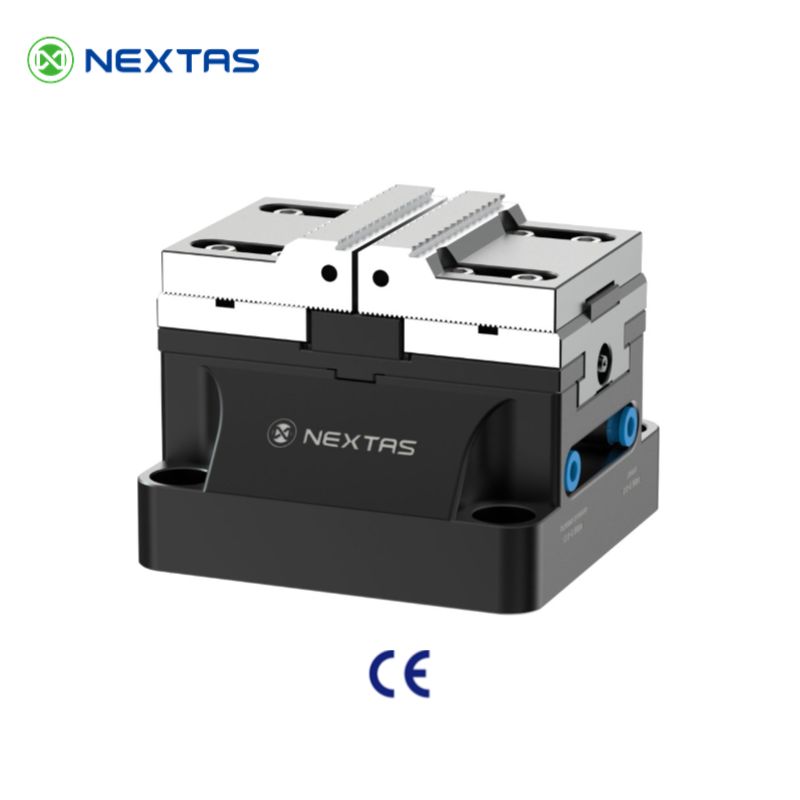
Gone are the days of tedious jaw changes. Our vises allow for jaw installation and removal with remarkable speed, often in mere seconds. This swiftness extends to reconfiguring the jaws by rotating them 180° to expand the clamping range for larger workpieces. With Nextas' zero-point clamping systems, this innovation translates into setup time reductions of up to an astounding 90%, significantly increasing your machine's spindle hours.
Versatility for Diverse Workpieces
Our quick-change design enhances versatility, allowing you to easily switch between different types of jaws—from standard serrated hard jaws for roughing to machinable soft jaws for delicate finishing operations. This flexibility maintains a wide range of workpiece sizes and shapes can be accommodated efficiently.
Maintaining Micron-Level Repeatability
Despite the speed of change, our quick-change jaws guarantee consistent, micron-level repeatability. Nextas is proud to achieve and guarantee ±0.002mm repeatability, so that every workpiece change maintains the highest precision for flawless production. Furthermore, our solid designs, featuring a 4-bolt jaw mounting system and keyed truck, actively mitigate jaw lift, maintaining secure and stable clamping even under aggressive machining conditions.
Multi-Station Vises: Best When One Cycle Can Carry More Parts
Multi-station vises become more valuable when the cycle is long enough to justify loading several parts together and the machine can still maintain access, chip evacuation, and stable clamping across all stations. In that case, the gain comes from denser loading and fewer interruptions per finished part.

Consolidated Operations, Reduced Handling
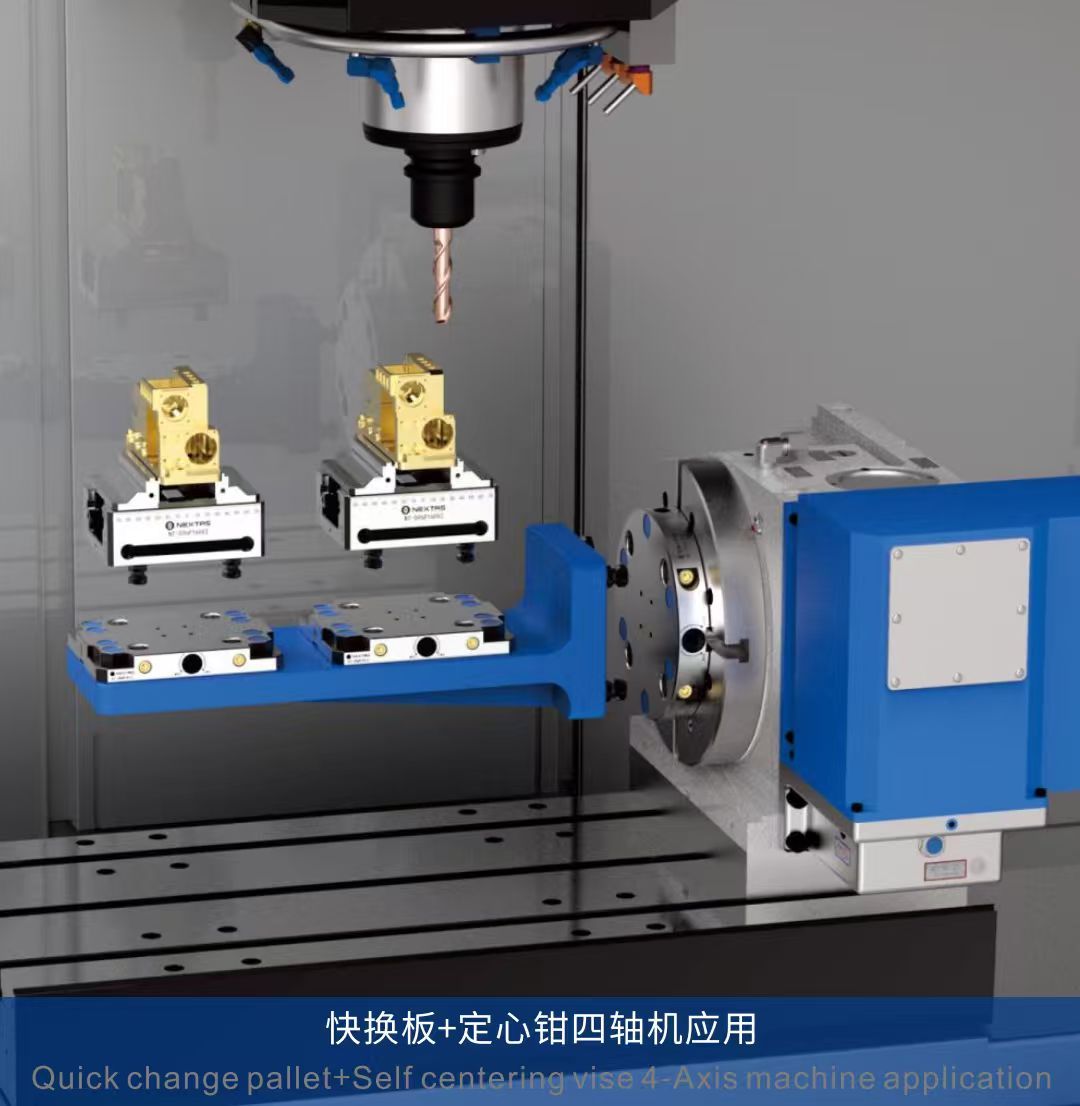
Multi-station fixtures enable multiple workpieces to be clamped simultaneously, or multiple operations to be performed on a single workpiece, all within one clamping setup. Imagine placing 3 to 4 vises on a single 400mm base, processing several parts or stages in one go! This significantly reduces the need for frequent workpiece handling and re-clamping, a critical factor in shortening overall production time.
Enhanced Machine Utilization and Cost Savings
By minimizing idle time and maximizing the active machining period, multi-station setups drastically increase machine utilization, especially for high-value 5-axis machines. This directly translates into lower labor costs and improved operational efficiency.
Superior Accuracy and Adaptability
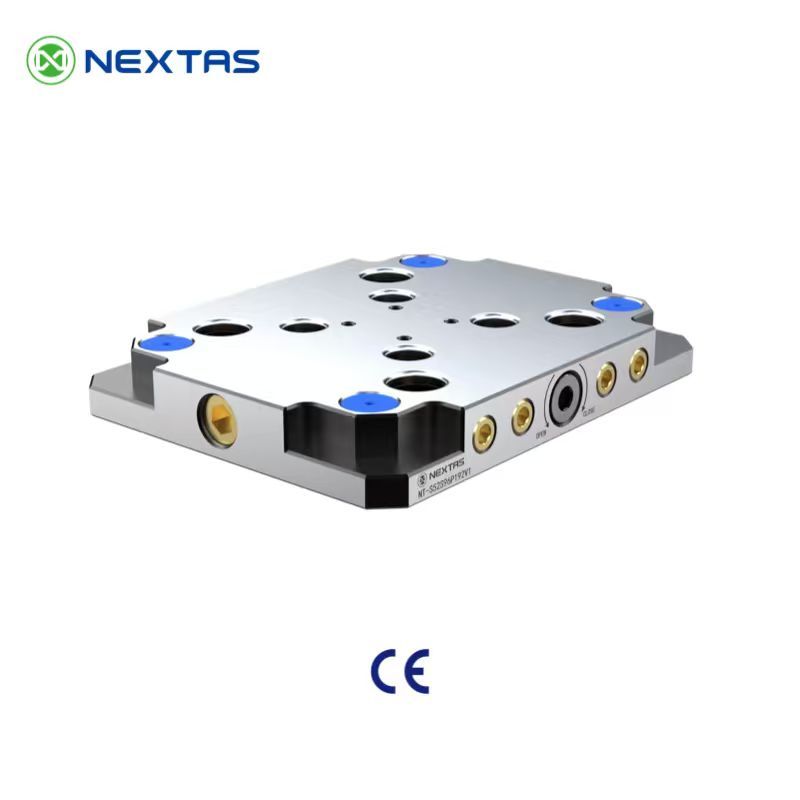
Reducing the number of clamping cycles inherently lowers the risk of cumulative errors, thereby improving overall processing accuracy and consistency. Moreover, multi-station designs expand the capabilities of 5-axis machines, allowing for complex multi-face machining that might otherwise require numerous individual setups. Nextas systems are engineered for easy integration with automation, featuring air-blast self-cleaning and sensor feedback ports for robotic loading and unloading, further boosting overall efficiency. Our compatibility with industry-standard zero-point systems like EROWA and System-3R maintains broad applicability and ease of integration.
When Combining Both Upgrades Makes Sense
Some shops eventually need both: quick-change jaws for flexible part switches and multi-station loading for repeat batches. The decision should be staged around actual workflow data so the first investment solves the current bottleneck instead of adding complexity too early.
A simple decision rule for most shops
- Choose quick-change jaws first when part families change often, setup knowledge lives in the operator’s head, or one machine must jump between soft jaws, hard jaws, and special forms throughout the week.
- Choose multi-station loading first when the program is already stable and the spindle spends too much time waiting for the next part to be loaded.
- Combine both when you have repeat batches large enough to justify multi-part loading, but you still need a fast way to switch jaw sets between families.
What people forget during selection
The vise body is only part of the throughput story. You also need to look at jaw inventory, setup documentation, probe strategy, chip evacuation, wrench access, and whether the operator can clean and reload the system without awkward extra motions. A technically impressive setup can still underperform if those practical details are ignored.
For many shops, the winning approach is to standardize jaw interfaces first, measure the resulting setup reduction, and then decide whether the next bottleneck is now spindle utilization. That staged path keeps investment tied to actual gains instead of assumptions.
Where combination setups work best
Combining quick-change jaws with a multi-station platform works especially well on repeat aluminum, steel, and precision component families where several similar blanks can be loaded together but clamping forms still change between product variants. In those cases, the shop gains capacity from both sides: faster setup recovery between jobs and more productive spindle time during each cycle.
At Nextas, we focus on making that transition practical rather than theoretical, so the workholding system fits the machine, the operator, and the real production mix.