English
 Español
 Français
 Deutsch
 Polski
 Türkçe
 Русский
 简体中文
简体中文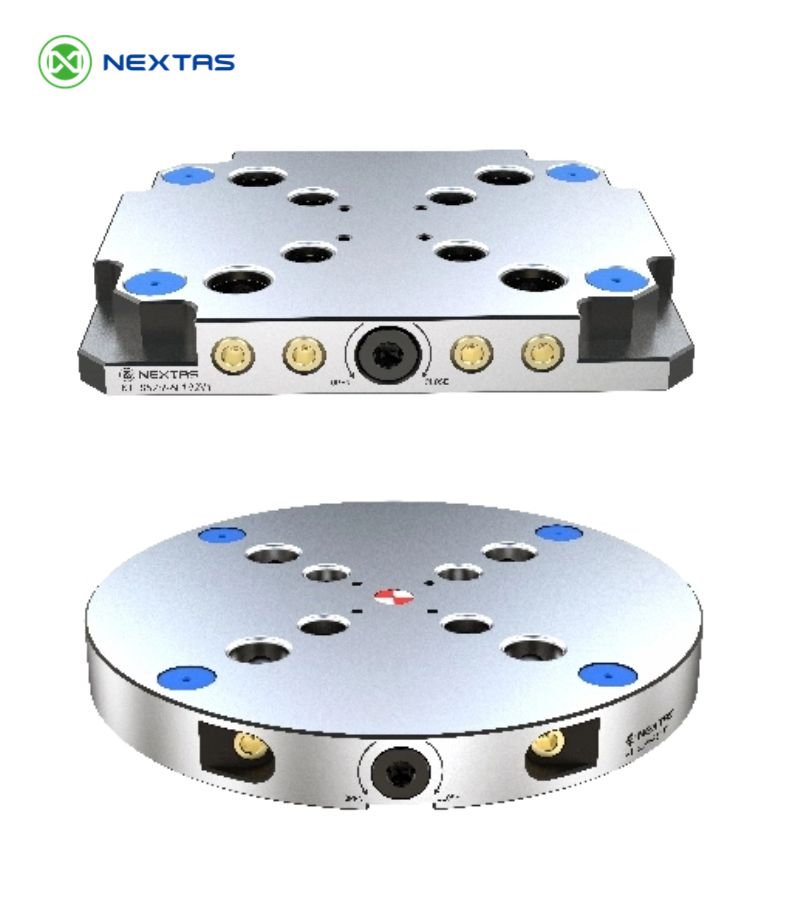
Why mixed-vise setups create hidden downtime
Many shops do not run one vise size forever. They move between compact parts, longer workpieces, prototype fixtures, and palletized batches. When every change in vise size also forces a plate swap, a new adapter stack, or extra alignment work, the quick-change advantage starts leaking away in small but expensive steps.
That problem gets worse in high-mix cells. Operators must remember more standards, planners must stock more subplates, and engineering teams end up standardizing around multiple machine-side interfaces instead of one repeatable base.
Three checks before you choose a combo plate
- List every vise and fixture family that must land on the same machine interface.
- Measure real table space, especially on rotary or 5-axis machines.
- Decide whether today’s need is operator convenience, automation preparation, or both.
What makes NEXTAS zero-point plates a strong baseline
The NEXTAS Zero Point Plate family is engineered around repeat positioning below 0.005 mm, hardened stainless-steel construction, durability up to 500,000 cycles, and clamping-force classes from 9,000 N to 40,000 N depending on model.
Beyond raw precision, the platform includes practical details that matter in production: pneumatic and manual release options, 4 × 90° indexing, airtightness testing, self-cleaning, pressure boost on some models, and compatibility with mainstream CNC bases. In other words, the platform is not only precise on paper; it is built for real coolant, chip, and changeover conditions.
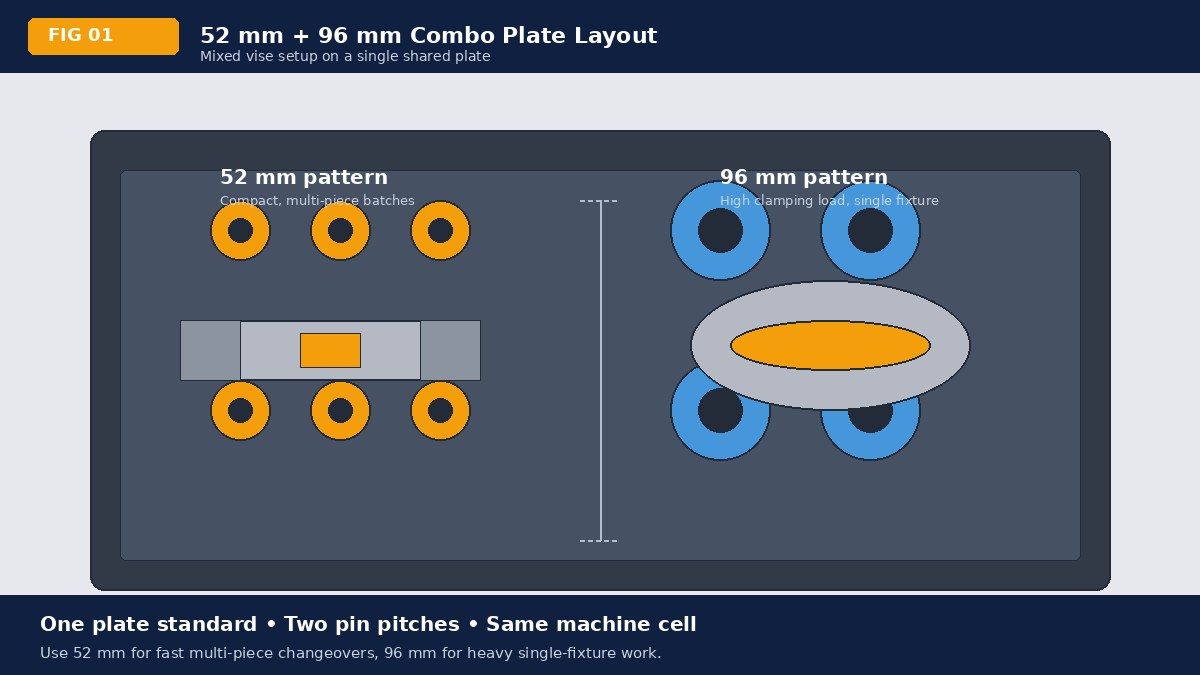
How the 52 mm + 96 mm combo plate simplifies changeovers
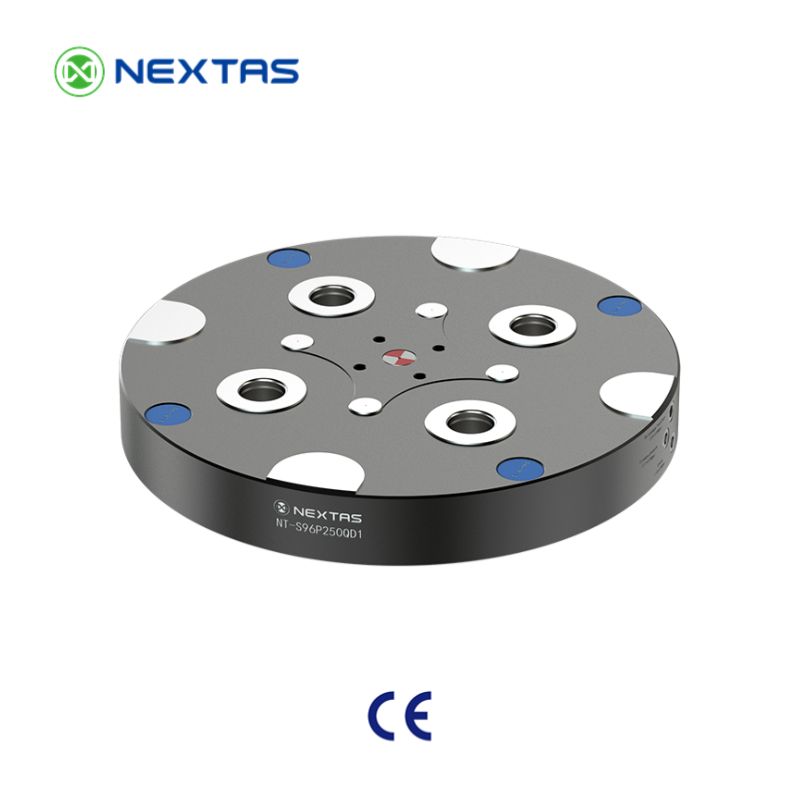
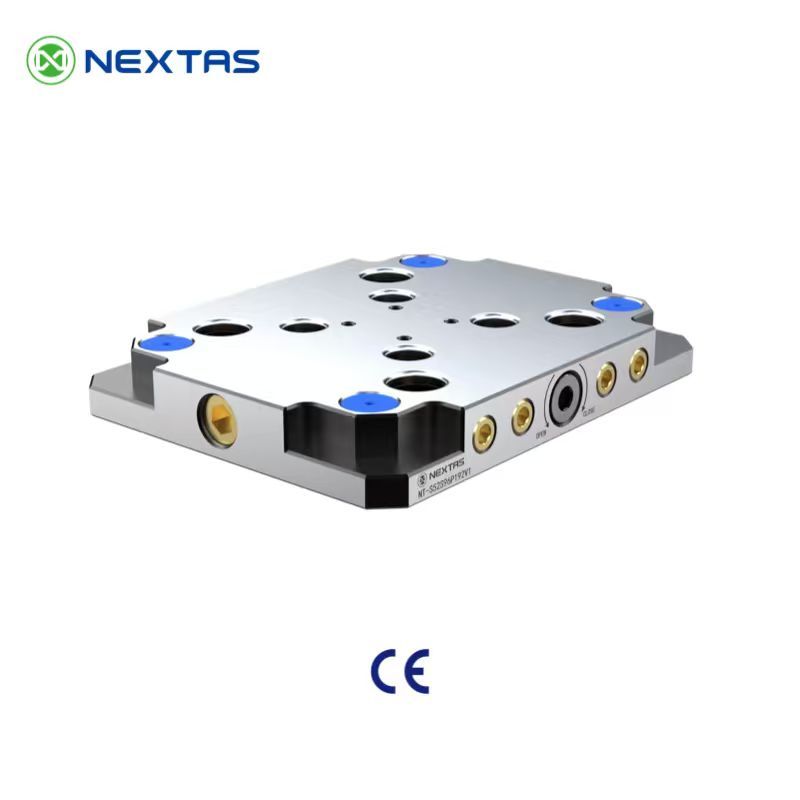
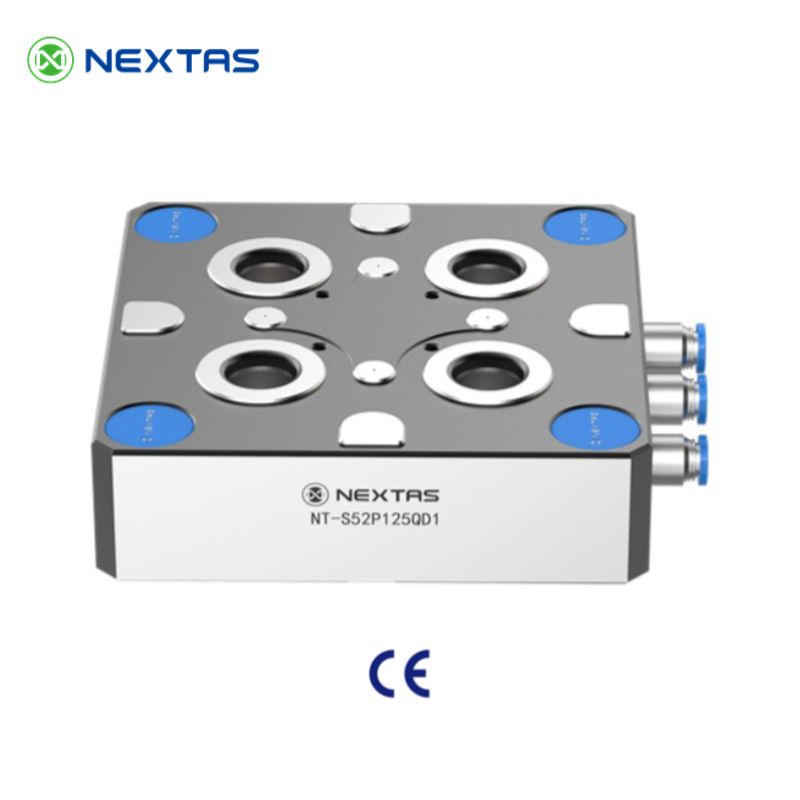
The new combo plate combines both 52 mm and 96 mm grid dimensions on one zero-point plate. For a shop that already uses different NEXTAS vise sizes, that means one plate can support the full vise family instead of splitting the cell into separate standards.
In practice, that reduces plate swaps, simplifies spare-part planning, and makes fixture layout decisions easier for engineers and operators. The combo plate is also available in square and round versions, giving shops more flexibility when they need to fit different machine tables, rotary axes, or space envelopes.
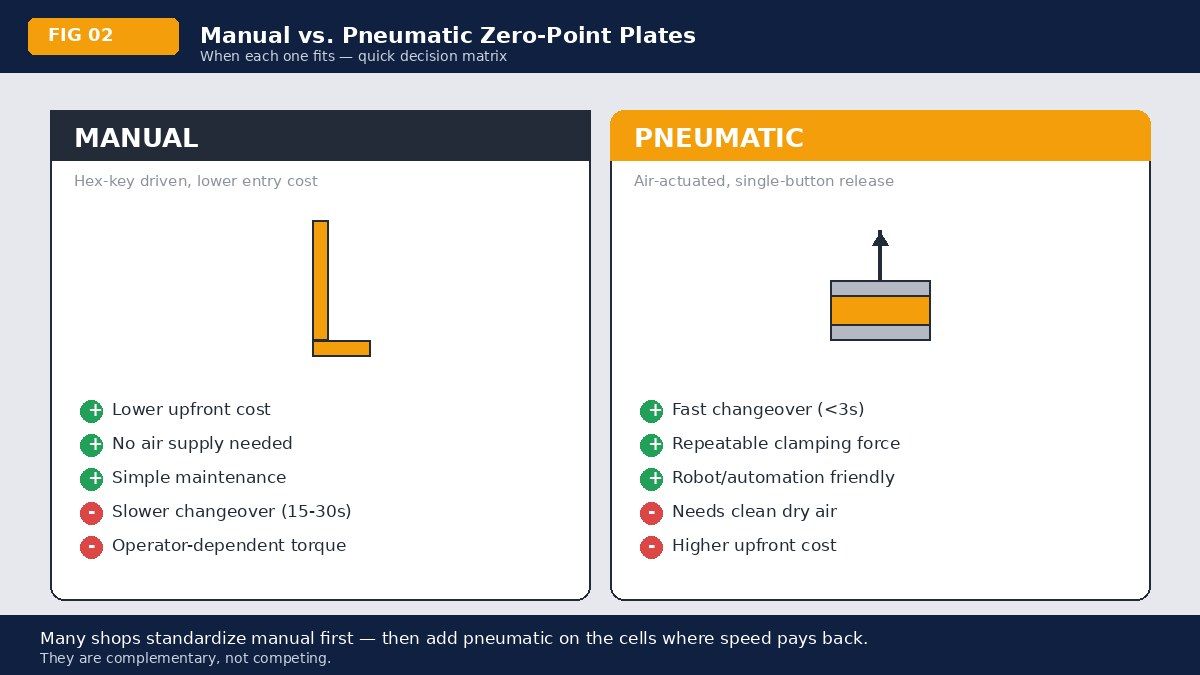
Manual or pneumatic: which route fits your shop?
Manual plates still make sense when changeovers are moderate, air supply is limited, or the goal is to standardize the interface first at the lowest complexity. Pneumatic plates make more sense when the cell changes fixtures often, the carrier is heavier, or the shop wants to move toward automation-ready handling.
In practice, the broader NEXTAS zero-point family can support 30-second mold changes and raise equipment utilization by more than 40% in the right production context. The real decision is therefore not simply “manual versus pneumatic,” but which version best matches your changeover frequency, operator handling load, and automation roadmap.
- Confirm which vise families need to share one machine-side plate.
- Check table footprint, bolt pattern, and whether a square or round combo layout fits better.
- Decide whether your next step is simple standardization or higher-frequency automated changeover.
Need a shortlist?
Tell us your vise mix, machine table, and changeover target
We can help you judge whether a combo plate, a standard 52 mm / 96 mm plate, or a pneumatic pallet solution fits your process best.