English
 Español
 Français
 Deutsch
 Polski
 Türkçe
 Русский
 简体中文
简体中文The high-precision pneumatic vise, with its unique combination of power, speed, and adaptability, offers major advantages. However, unlocking its full potential requires more than just installation; it demands a deep understanding of its design, application scenarios, and optimization strategies. Below is a practical guide to perfectly utilizing a pneumatic vise and improving your machining capabilities.
1. Choose the Right Application Scenarios to Maximize Clamping Value
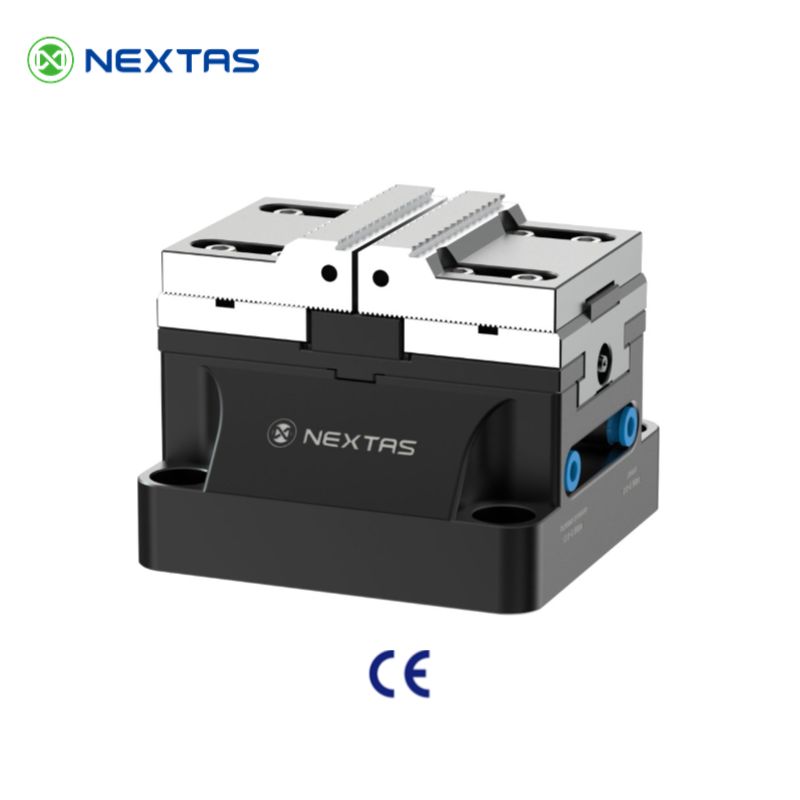
A high-precision pneumatic vise is engineered for specific machining needs, and aligning it with the right scenarios is the first step to success. Nextas’ NPV-160 pneumatic vise, for instance, integrates a pneumatic-hydraulic booster system that delivers up to 4000 kgf of clamping force at just 6 bar air pressure. This makes it ideal for heavy-duty cutting tasks like mold roughing, where stable workpiece holding is critical.
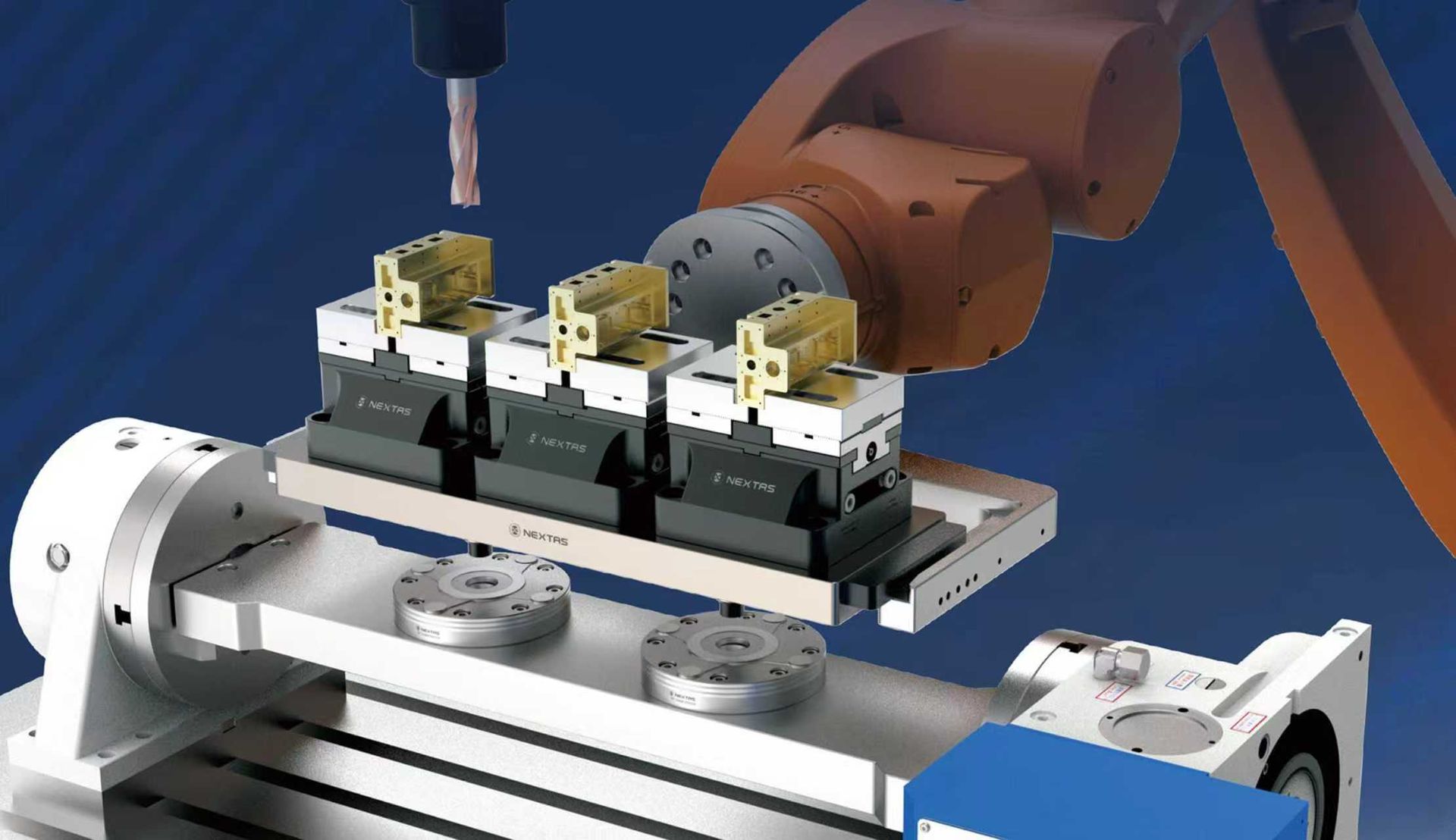
Its ≤0.01 mm repeatability also makes it a perfect fit for mass production in the automotive and electronics industries, maintaining consistent quality across thousands of parts. For automated machining cells, this vise works well with robotic arm loading and unloading systems. Unlike traditional clamping devices that require manual operation, it can be linked to the machine tool’s M-code via a solenoid valve, enabling unmanned production for extended periods.
Additionally, its compatibility with horizontal machining centers and pallet changers allows multiple workpieces to be processed in a single setup, slashing setup times and boosting throughput. Enterprises should avoid overusing it for light-duty, low-volume tasks where basic vises suffice—focus on high-demand scenarios where precision and efficiency gaps exist.
2. Master Installation and Integration for Easy Automation
The performance of a pneumatic vise hinges on proper installation and integration with your existing workflow. Nextas’ high-precision pneumatic vise features a precision-ground base with standard keyways and mounting holes, allowing quick and accurate attachment to various machining center T-slot tables. For even greater efficiency, pair it with a zero-point clamping system—this combination enables ultra-fast fixture changeovers, further reducing downtime and enhancing production flexibility.
Integration with automation systems is another critical aspect. The vise’s pneumatic-hydraulic booster technology eliminates the need for external hydraulic units, simplifying system configuration. By connecting it to your machine’s control system via a solenoid valve, you can automate clamping and unclamping processes, aligning with robotic loading/unloading or fully automated cells.
Ensure your team is familiar with M-code programming for smooth communication, and don’t hesitate to request CAD files (STEP/IGES or 2D drawings) from the manufacturer to verify fit with your equipment—this proactive step prevents compatibility issues later.
A good pneumatic-vise setup usually has these basics in place
- Stable air supply: Pressure fluctuation creates inconsistent clamping behavior.
- Matched jaw choice: Use hard, soft, or dovetail jaws according to the actual part geometry.
- Repeatable locating: Pair the vise with a standardized base or zero-point reference when changeovers are frequent.
3. Optimize Clamping Strategies for Precision and Versatility
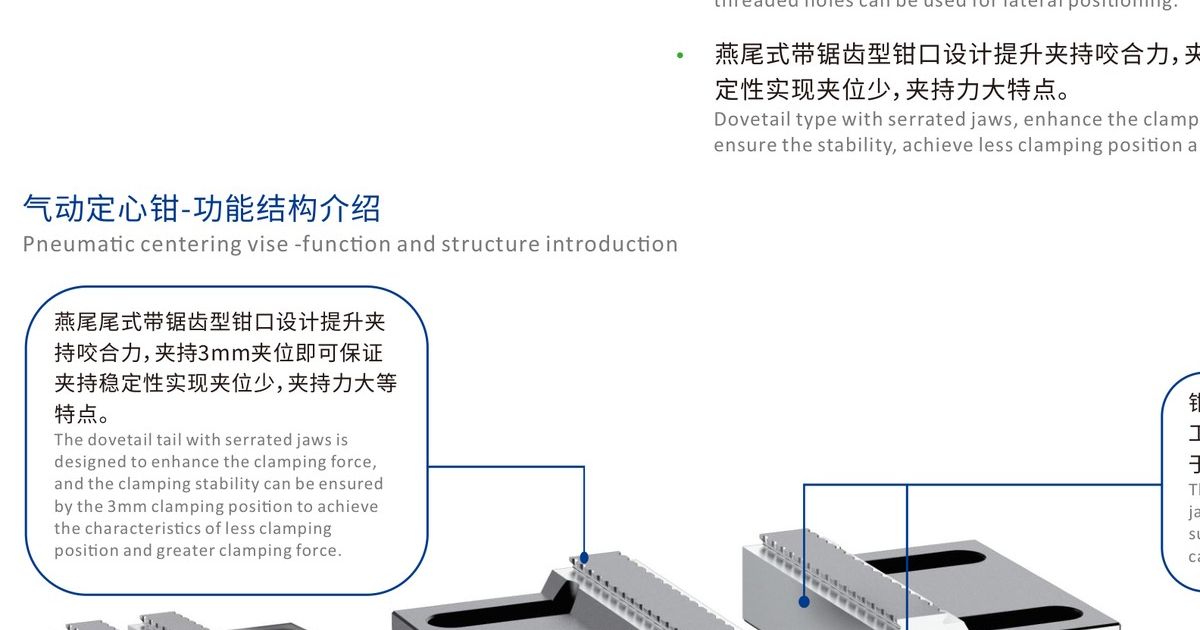
One of the standout advantages of a high-precision pneumatic vise is its flexible clamping capabilities, and leveraging these effectively is key to machining upgrades. Nextas’ design includes serrated dovetail jaws and a 3mm clamping surface, achieving the goal of “smaller contact area, greater clamping force” while minimizing workpiece deformation—critical for delicate or thin-walled parts.
Mastering jaw selection and usage expands the vise’s versatility:
- Hard jaws: Utilize their front and reverse sides for different workpiece geometries. The front side is ideal for standard clamping, while the reverse side accommodates irregular shapes, maintaining a secure grip without damaging machined surfaces.
- Soft jaws: Customize them for complex or fragile workpieces, and use modeling positioning clamping to match specific part contours—this is particularly useful for medical device components or aerospace parts that demand zero-defect finishes.
- Lateral positioning: Take advantage of the side threaded holes on solid jaws for auxiliary positioning, enhancing stability during high-feed, deep-cut operations.
Remember, the vise’s FCD60 high-tensile ductile iron body provides excellent vibration damping. Pairing it with the right clamping strategy maintains even under harsh cutting conditions, workpiece stability is maintained, resulting in superior surface finishes and reduced tool wear.
4. Implement Regular Maintenance to Sustain Long-Term Performance
A high-precision pneumatic vise is an investment in long-term productivity, and proper maintenance is essential to preserve its accuracy and durability. Nextas’ fully sealed design prevents chips, coolant, and contaminants from entering the internal mechanism—simplifying maintenance but not eliminating it.
Key maintenance practices include:
- Lubrication: Regularly check the S-shaped oil lubrication system to ensure smooth operation of moving parts. Proper lubrication enhances precision and extends the vise’s service life.
- Cleaning: After heavy use, use compressed air to clear debris from the clamping surface and guide rails—this protects the serrated jaws and maintains consistent clamping force.
- Inspection: Periodically verify repeatability and clamping force using calibrated tools. If deviations are detected, refer to the manufacturer’s guidelines for adjustments; the vise’s solid construction allows for long-term recalibration.
Compared to traditional hydraulic vises, the pneumatic-hydraulic booster design reduces maintenance complexity by eliminating external hoses and hydraulic fluid management—freeing up your team to focus on core machining tasks.
Need application advice?
Tell us the part and the machine before you commit to a vise size
We can review stroke, jaw style, mounting interface, and automation compatibility so you do not end up with a fast vise that still slows down the whole process.
Conclusion: From Tool to Transformation Driver
A high-precision pneumatic vise is a valuable tool for machining upgrades when used strategically. By selecting the right application scenarios, mastering installation and automation integration, optimizing clamping strategies, and maintaining regular upkeep, enterprises can achieve significant improvements: reduced cycle times, consistent micron-level precision, and integration into automated workflows.
Nextas’ high-precision pneumatic vise, with its 4000 kgf clamping force, ≤0.01 mm repeatability, and pneumatic-hydraulic booster technology, is engineered to address the pain points of modern manufacturing. If you’re scaling mass production, upgrading automated cells, or tackling heavy-duty cutting tasks, this vise adapts to your needs and delivers measurable results.
To take your machining upgrades further, partner with a trusted supplier that offers technical support, CAD resources, and customized solutions. By combining the right tool with expert usage, your enterprise can not only meet current production demands but also build a foundation for future growth in the era of smart manufacturing.